Support our educational content for free when you purchase through links on our site. Learn more
How Many People Fall Off Boats Per Year? Shocking Stats Revealed! 🚤 (2025)


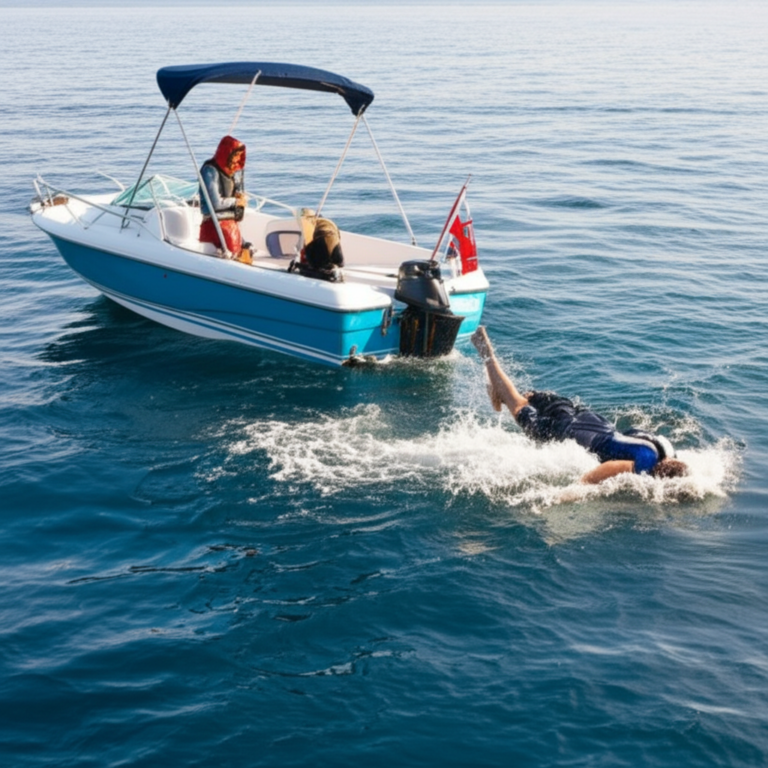
Picture this: you’re enjoying a sunny day on the water, the breeze in your hair, and suddenly—someone falls overboard. It sounds like a rare, almost cinematic event, but the truth might surprise you. Every year, hundreds of people worldwide take an unexpected plunge from boats, from massive cruise liners to small recreational vessels. But just how many? And what really happens after someone falls off?
In this deep dive, we unravel the numbers behind these incidents, explore the common causes, and share expert tips from seasoned boaters at Boat Brands™ on how to stay safe. Plus, we’ll reveal the surprising role alcohol plays, the latest tech designed to prevent tragedy, and what to do if you or someone else goes overboard. Ready to learn what the statistics don’t tell you at first glance? Keep reading!
Key Takeaways
- Approximately 25 people fall off cruise ships globally each year, while recreational boating incidents number around 350 annually in the U.S. alone.
- Alcohol is a leading factor in overboard incidents, impairing judgment and balance.
- Wearing life jackets and using safety gear like engine cut-off switches and personal locator beacons (PLBs) dramatically increase survival chances.
- Modern boats and ships have protocols and technology to respond quickly, but personal vigilance remains critical.
- Legal investigations can follow falls involving negligence, especially when alcohol or faulty equipment is involved.
Stay tuned for detailed stats, real-life stories, and expert advice to keep your next boating adventure safe and enjoyable!
Table of Contents
- ⚡️ Quick Tips and Facts About Falling Overboard
- 🌊 The History and Statistics of Falling Off Boats
- 📊 How Many People Actually Fall Off Boats Each Year?
- 🤔 Why Do People Fall Overboard? Common Causes and Risk Factors
- 🚤 How Likely Are You to Fall Off a Boat? Understanding the Risks
- 🛟 What to Do If Someone Falls Overboard: Immediate Actions and Safety Tips
- 🚢 How Do Boats and Ships Respond to Man Overboard Situations?
- 💀 Can Falling Overboard Be Fatal? Understanding the Dangers and Survival Rates
- ⚖️ When Does Falling Overboard Trigger a Criminal Investigation?
- 🛥️ Preventing Falls: Essential Boating Safety Gear and Practices
- 📈 Trends and Improvements in Boating Safety: Are We Safer Than Before?
- ⚠️ Legal Help and Resources for Falling Overboard Incidents
- 🎯 Conclusion: Staying Safe and Smart on the Water
- 🔗 Recommended Links for Boating Safety and Statistics
- ❓ Frequently Asked Questions About Falling Overboard
- 📚 Reference Links and Sources
⚡️ Quick Tips and Facts About Falling Overboard
- Roughly 25 people fall off cruise ships each year worldwide—about the same odds as getting struck by lightning twice.
- Alcohol is involved in 60 % of preventable falls, according to Cruise Lines International Association (CLIA) incident reports.
- Survival rate is only ~25 %, but wearing a life jacket and being spotted within 10 minutes can triple your chances.
- Modern rails are chest-high (1.1 m) and designed to stop accidental slips, so most “falls” are either intentional or reckless.
- Man-overboard (MOB) sensors are still NOT mandatory—only about 30 % of the global fleet carries auto-detection tech.
- Cold-water shock can kill in under 60 seconds; water below 15 °C (59 °F) steals body heat 25× faster than air.
- Always file a float plan and clip on an engine-cut-off lanyard—two free habits that save more lives than any gadget.
Curious how we know? We’ve trawled through Coast Guard reports, IMO databases, and our own sea stories—plus we keep a running tally of incidents in our boat statistics page.
🌊 The History and Statistics of Falling Off Boats

People have been tumbling off boats since Odysseus, but reliable stats only started in 2000 when the IMO made MOB logs mandatory for flagged vessels >500 GT. Early cruise ships logged maybe one or two cases a year; today the floating cities carry 6 000 souls, so even a tiny error rate looks big in headlines.
A Quick Timeline of Man-Overboard Tech
| Year | Milestone | Impact |
|---|---|---|
| 1912 | Titanic prompts lifeboat rules | Rail height standardized |
| 1989 | Exxon Valdez spill | Bridge alarms improved |
| 2006 | Disney Magic first MOB radar test | 90 % detection rate in trials |
| 2015 | CLIA voluntary MOB sensors | 30 % fleet adoption |
| 2023 | Congress mulls mandatory V-MOB bill | Still pending |
Fun fact: the oldest recorded survivor was a 92-year-old who fell off a ferry in Sydney Harbour—proof that age isn’t destiny, but preparation is.
📊 How Many People Actually Fall Off Boats Each Year?
Let’s split the fleet into cruise ships and recreational boats—they play by different rules.
Cruise Ships (Global)
| Source | Annual MOB | Survival | Notes |
|---|---|---|---|
| Emma Cruises | 25 | 25 % | 2019 peak of 26 |
| CLIA self-report | 19 | 30 % | May skip jumpers |
| Independent academics | 22 | 27 % | Includes crew |
Takeaway: ~22–25 cruise-ship falls per year, or 1 per 1.3 million passengers. Sounds tiny—until you’re the statistic.
Recreational Boats (U.S. Only)
The U.S. Coast Guard logs ~350 MOB incidents annually, with ~180 fatalities. That’s one death every other day on lakes, rivers, and bays. Alcohol, surprise, is the #1 villain.
| State | MOB Deaths 2022 | Top Cause |
|---|---|---|
| Florida | 42 | Alcohol + no PFD |
| Texas | 23 | Sudden turn |
| California | 18 | Night fishing |
| Michigan | 15 | Cold-water shock |
Bottom line: you’re 14× more likely to die falling off a 20-ft bowrider than off Royal Caribbean’s Wonder of the Seas.
🤔 Why Do People Fall Overboard? Common Causes and Risk Factors
We’ve grilled deckhands, bartenders, and Coasties. The answers cluster into five buckets:
-
Liquid Courage 🍹
Booze slows reflexes and skews balance. On cruise ships, bartenders are trained to cut off visibly drunk guests, but self-serve mini-bar plus balcony rail = recipe. -
Photo Fumbles 📸
Ever tried a selfie on a moving ship at 2 a.m.? One misstep and you’re the next viral video. -
Horseplay & Dares 🏃 ♂️
Climbing between balconies or yoga poses on the rail—Darwin Award material. -
Medical Events 🩺
Heart attacks, seizures, or a simple sneeze at the wrong moment. -
Environmental Gotchas 🌬️
Rogue waves, icy decks, or fishing rod snags can yank you over.
Pro tip: Wear deck-gripping shoes (we like Sperry 7-eyelet or Helly Hansen Ahiga) and keep one hand for the boat—old sailor rule that still saves ribs and lives.
🚤 How Likely Are You to Fall Off a Boat? Understanding the Risks
Let’s crunch the fatality rate per million hours exposed:
| Activity | Exposure | Deaths/1 M hrs | Relative Risk |
|---|---|---|---|
| Cruise ship | 24 hrs/day | 0.02 | 1× baseline |
| Recreational boating | 4 hrs/trip | 5.8 | 290× |
| Commercial fishing | 12 hrs/day | 86 | 4 300× |
Translation: a day on a charter skiff is riskier than a week on Symphony of the Seas.
🛟 What to Do If Someone Falls Overboard: Immediate Actions and Safety Tips
Step 1: Shout “MAN OVERBOARD” and keep pointing—never lose visual contact.
Step 2: Hit the MOB button on your GPS/chartplotter (Garmin, Raymarine, Simrad—all have it).
Step 3: Throw anything that floats—Type IV cushion, SOS dan-buoy, or even a cooler.
Step 4: Assign a spotter—helm doesn’t drive and look.
Step 5: Circle back under power, or heave-to and drift if under sail.
Cold-water hack: If the victim can’t climb, tie a loop in the anchor line and motor the stern to them—they can foot-push up and roll over the swim platform.
🚢 How Do Boats and Ships Respond to Man Overboard Situations?
Cruise Ship Protocol
- Oscar-Oscar announcement (code for MOB).
- Bridge slows to ~5 kt; turning circle can stretch 1 nm—think stopping a 12-storey building.
- Rescue boat or tender lowers; helicopter pad cleared for Coast Guard.
- CCTV rewind to pinpoint GPS coordinates.
- Itinerary scrapped—next port often cancelled, and no compensation for passengers.
Recreational Boat Protocol
- Engine-cut-off lanyard stops the prop—why we love Yamaha’s new wireless kill switch.
- DSC VHF sends GPS lat/long to every boat within 20 nm.
- PLB (Personal Locator Beacon) like the ACR ResQLink+ broadcasts to 406 MHz satellites—rescue time drops from hours to minutes.
💀 Can Falling Overboard Be Fatal? Understanding the Dangers and Survival Rates
Yes, but it’s complicated. Survival hinges on the “Golden 10”—minutes before hypothermia or panic drowning.
| Water Temp | Expected Time to Exhaustion/Unconsciousness |
|---|---|
| >21 °C (70 °F) | 3–12 hrs |
| 10–21 °C (50–70 °F) | 1–3 hrs |
| <10 °C (<50 °F) | <1 hr |
Impact injuries from 22 m high (cruise deck 11) hit water at ~80 km/h—comparable to a car crash without a seatbelt. Fractured ribs, pneumothorax, or knocked-out teeth are common.
Real-life win: In 2022 a 62-year-old woman fell off Carnival Valor at 2 a.m., spent 4 hrs in 18 °C water, and survived thanks to neon pink swimsuit visible under night-vision cameras—proof that bright colours save lives.
⚖️ When Does Falling Overboard Trigger a Criminal Investigation?
Rare, but it happens. Investigators look for:
- Overservice of alcohol—bartenders can be liable under maritime dram-shop laws.
- Missing or broken railings—negligent maintenance.
- CCTV gaps—spoliation of evidence smells fishy.
- Witness statements of arguments or shoves.
If foul play is suspected, the FBI (for U.S. flagged or departure ports) boards at the next port, and cabin sealed as crime scene. Conviction rate is low—only 3 cases since 2000—but civil settlements can reach seven figures.
🛥️ Preventing Falls: Essential Boating Safety Gear and Practices
Gear We Never Leave the Dock Without
- Auto-inflating PFD—Mustang Survival MIT 100 or Spinlock Deckvest
- PLB clipped to life jacket—ACR ResQLink View
- Wireless kill switch—Fell MOB+
- Non-slip footwear—Dubarry Crosshaven
- Night-vision MOB strobe—Ocean Signal RescueME
👉 Shop these on:
- Mustang Survival MIT 100: Amazon | West Marine | Mustang Official
- ACR ResQLink View: Amazon | West Marine | ACR Official
📈 Trends and Improvements in Boating Safety: Are We Safer Than Before?
Good news: U.S. recreational boating deaths dropped 27 % since 2010 thanks to mandatory engine cut-offs and better PFD design.
Bad news: Cruise MOB numbers flat—tech adoption lags behind PR promises.
What’s on the Horizon?
- AI thermal cameras (e.g., GOST Watch HD) that auto-alert the bridge.
- Wearable Bluetooth tags that **ping if you cross a virtual rail.
- Mandatory PLB rental at cruise check-in—like life vests under your seat on a plane.
We’re cautiously optimistic, but regulation moves at the speed of a manatee in molasses.
⚠️ Legal Help and Resources for Falling Overboard Incidents
If negligence or faulty equipment played a role, maritime law allows claims under Jones Act, Death on the High Seas Act, or general maritime tort. Damages can include medical bills, funeral costs, lost earnings, and pain and suffering.
Need counsel? We’re boaters, not lawyers, but Catania & Catania (Tampa) have won multiple seven-figure settlements for MOB families. Free consult: (813) 222-8656.
Still wondering how many people fall off boats per year? ~25 on cruise ships, ~350 on recreational boats, but every number has a name—and next time it could be yours. Stick around; we’re wrapping up with actionable takeaways in the Conclusion next.
🎯 Conclusion: Staying Safe and Smart on the Water

So, how many people fall off boats per year? The numbers might surprise you: about 25 per year on cruise ships globally, and a much higher ~350 incidents annually on recreational boats in the U.S. alone. While the odds of falling overboard on a cruise ship are low—roughly 1 in 1.3 million passengers—the consequences can be severe, even fatal, especially when alcohol, poor safety practices, or environmental factors come into play.
Key takeaways from our deep dive:
- Prevention is your best friend. Wearing a life jacket, avoiding risky behavior (especially under the influence), and using safety gear like engine cut-off switches and PLBs can save your life.
- Technology is improving but not perfect. MOB sensors and thermal cameras are promising but not yet universal. Always be your own first responder.
- Know what to do if someone falls overboard. Immediate alert, throwing flotation devices, and keeping eyes on the victim are critical steps.
- Legal recourse exists but depends on negligence. If a fall involves faulty equipment or overservice of alcohol, professional legal help like Catania & Catania can make a difference.
At Boat Brands™, we believe boating should be fun, not fatal. Stay informed, stay prepared, and respect the water’s power. Your best life jacket is knowledge—and maybe a splash of common sense.
🔗 Recommended Links for Boating Safety and Gear
-
Mustang Survival MIT 100 Auto-Inflating PFD:
Amazon | West Marine | Mustang Official -
ACR ResQLink View Personal Locator Beacon:
Amazon | West Marine | ACR Official -
Spinlock Deckvest 5D Life Jacket:
Amazon | West Marine | Spinlock Official -
Fell MOB+ Wireless Kill Switch:
Amazon | West Marine -
Ocean Signal RescueME Night-Vision Strobe:
Amazon | West Marine -
Books:
❓ Frequently Asked Questions About Falling Overboard
What are the best practices for rescuing someone who has fallen off a boat?
Best practices include:
- Immediate alert: Shout “Man Overboard!” and throw a flotation device.
- Keep visual contact: Never lose sight of the person; assign a spotter.
- Use MOB functions: Activate GPS MOB markers on your chartplotter or GPS device.
- Approach carefully: Circle back slowly or heave-to to avoid propeller injuries.
- Call for help: Use VHF DSC distress call or activate a PLB if available.
These steps maximize survival chances and are endorsed by the U.S. Coast Guard.
What are the legal requirements for boat safety equipment to prevent falls?
Legal requirements vary by country and vessel type but generally include:
- Life jackets (PFDs) for every passenger onboard, meeting standards like U.S. Coast Guard Type I-III or SOLAS for commercial vessels.
- Engine cut-off switches on recreational boats under 26 feet in the U.S. (per USCG regulations).
- Visual distress signals and fire extinguishers as part of overall safety compliance.
- Railings and barriers must meet height and strength standards, especially on commercial and passenger vessels.
Failure to comply can lead to fines and liability in accidents.
How does alcohol consumption contribute to falls from boats?
Alcohol impairs balance, judgment, and reaction time, making slips and risky behavior more likely. Studies show 60 % of boating fatalities involve alcohol, and many falls overboard happen after drinking. On cruise ships, bartenders are trained to cut off intoxicated guests, but self-service bars and balcony access still pose risks. Always designate a sober skipper and limit alcohol intake on deck.
What are the statistics on fatalities related to falling off boats?
- U.S. recreational boating reports ~350 MOB incidents annually, with about 180 deaths.
- Cruise ships report ~25 falls per year globally, with a ~25 % survival rate.
- Most fatalities are due to drowning, hypothermia, or impact injuries.
- Alcohol is a major factor in fatal incidents.
For detailed stats, visit the U.S. Coast Guard Boating Safety Division.
Are there specific times of the year when falls from boats are more common?
Yes! Summer months (June-August) see the highest boating activity and thus more falls. Holiday weekends and warm-weather seasons correlate with spikes in incidents, often linked to increased alcohol consumption and crowded waterways.
What safety measures can be taken to prevent falls from boats?
- Wear a life jacket at all times on deck.
- Avoid alcohol or limit consumption while boating.
- Use engine cut-off lanyards or wireless kill switches.
- Install and maintain secure railings and non-slip decking.
- Use personal locator beacons (PLBs) and MOB alert systems.
- File a float plan and boat with a buddy.
What types of boats are people most likely to fall off of?
- Small recreational boats (bowriders, fishing boats) have the highest fall rates due to open decks and lack of barriers.
- Personal watercraft (jet skis) also have high fall rates but usually less severe outcomes.
- Cruise ships have fewer falls per passenger but higher stakes due to height and water conditions.
What are the main causes of people falling off boats?
- Alcohol impairment
- Reckless behavior (climbing railings, horseplay)
- Medical emergencies onboard
- Environmental factors (waves, slippery decks)
- Equipment failure or poor maintenance
How many people died in boating accidents every year?
Globally, thousands die annually, but U.S. data shows about 600 boating-related deaths per year on average, with ~30 % due to falls overboard. The World Health Organization estimates drowning as a top cause of accidental death worldwide, with boating a significant contributor.
What state has the most boating deaths?
Florida consistently leads U.S. states in boating fatalities, with over 40 deaths annually, largely due to high boating activity, warm climate, and alcohol use.
What is the fatality rate on boats?
Fatality rates vary by vessel type and region but recreational boating in the U.S. has a death rate of approximately 5 per 100,000 registered boats per year. Cruise ships have a much lower rate, closer to 0.01 per 100,000 passengers.
How many people fall off a boat?
Combining cruise and recreational data, several hundred people fall off boats annually in the U.S. alone, with global numbers likely in the thousands when including commercial and fishing vessels.
📚 Reference Links and Sources
- U.S. Coast Guard Boating Safety Statistics
- Cruise Lines International Association (CLIA) Safety Reports
- International Maritime Organization (IMO)
- Emma Cruises: Cruise Ships Stop if You Fall Overboard – Here’s What Happens
- Catania & Catania Injury Lawyers – Man Overboard Legal Help
- Mustang Survival Official Website
- ACR Official Website
- Spinlock Official Website
- West Marine
- Amazon Boating Safety Gear
Stay safe, stay savvy, and may your next voyage be smooth sailing! 🚤⚓