Support our educational content for free when you purchase through links on our site. Learn more
15 Top Fishing Boat Brands: Find Your Perfect Catch 🎣

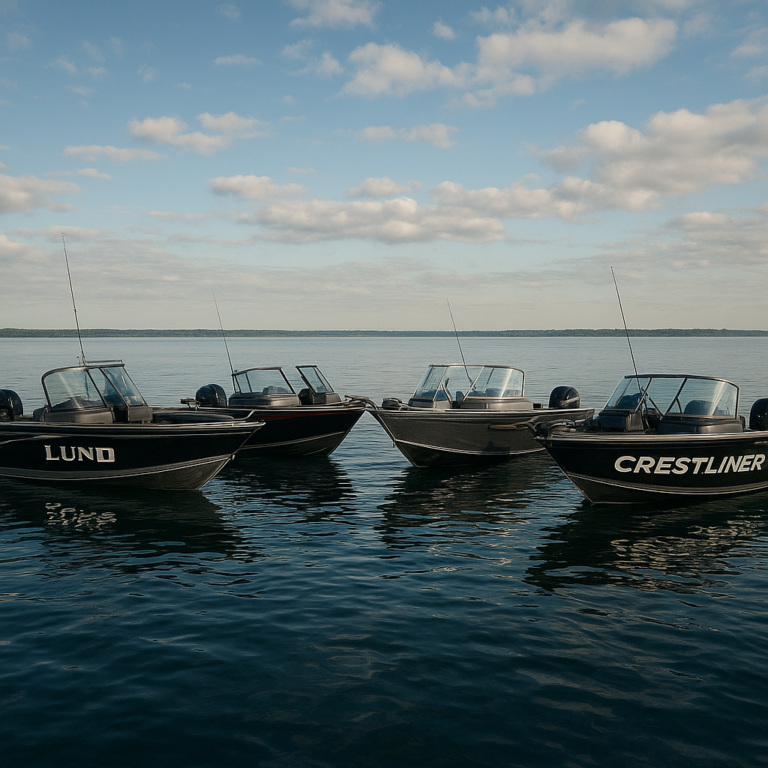
The top fishing boat brands depend on where you fish: Lund, Tracker, Crestliner, and Alumacraft are strong names to compare for freshwater aluminum boats, while Grady-White, Boston Whaler, Sea Hunt, and Parker offer saltwater options across different sizes and uses. For bass fishing, start with Ranger, Nitro, and Sketer, then compare specific models, condition, and dealer support before choosing.
We’ve seen anglers fall for a shiny boat at the dock, only to discover its draft doesn’t suit their favorite launch—or that the “fishing setup” leaves no comfortable seat for the rest of the crew. The best boat is the one that fits your water, fishing style, tow vehicle, and real-life crew, not just the one with the loudest reputation.
Below, we compare 15 well-known builders and break down what to look for in aluminum, bass, inshore, center-console, and offshore fishing boats. Start with the water you’ll fish most often; the right brand shortlist follows from there.
Key Takeaways
- Match the boat to your waters and fishing style. Freshwater aluminum, bass, shallow-water, and offshore boats are built for different jobs.
- Compare models, not just brands. Hull design, capacity, storage, livewells, engine, and equipment can vary widely within a single lineup.
- Consider these brand shortlists: Lund, Tracker, Crestliner, Alumacraft, and Lowe for aluminum fishing boats; Ranger, Nitro, and Sketer for bass boats; Boston Whaler, Grady-White, Sea Hunt, Sportsman, Cobia, Parker, and Carolina Skiff for saltwater options.
- Check local service and support. A capable dealer and access to parts can make ownership easier long after the sale.
- Inspect used boats carefully. Hull condition, engine history, trailer safety, and maintenance records matter more than a familiar logo.
Explore fishing boat brands:
- Freshwater and aluminum: Lund Official Website | Tracker Official Website | Crestliner Official Website | Alumacraft Official Website | Lowe Official Website
- Bass boats: Ranger Official Website | Nitro Official Website | Sketer Official Website
- Saltwater fishing boats: Boston Whaler Official Website | Grady-White Official Website | Sea Hunt Official Website | Sportsman Official Website | Parker Official Website
Table of Contents
- ⚡ Quick Tips and Facts About Fishing Boat Brands
- 🧭 Fishing Boat Brands: A Brief History and How the Market Evolved
- 🏆 15 Top Fishing Boat Brands Worth Knowing
- 1. Boston Whaler
- 2. Grady-White
- 3. Ranger Boats
- 4. Lund Boats
- 5. Tracker Boats
- 6. Crestliner
- 7. Alumacraft
- 8. Sketer
- 9. Nitro
- 10. Sea Hunt
- 11. Sportsman Boats
- 12. Cobia Boats
- 13. Parker Offshore
- 14. Carolina Skiff
- 15. Lowe Boats
- 📊 Fishing Boat Brand Comparison: Hulls, Uses, and Standout Strengths
- 🎣 Best Fishing Boat Brands by Style and Waters
- Best Aluminum Fishing Boat Brands
- Best Fish-and-Ski Boat Brands
- Best Freshwater Fishing Boat Brands
- Best Bass Boat Brands
- Best Center-Console Fishing Boat Brands
- Best Offshore Fishing Boat Brands
- Best Deep-Sea Fishing Boat Brands
- Best Inshore and Coastal Fishing Boat Brands
- 🛠️ Fiberglass vs. Aluminum Fishing Boats: Which Hull Fits Your Fishing?
- 🧠 How to Choose the Right Fishing Boat Brand
- Match the Boat to Your Waters and Fishing Style
- Compare Hull Design, Size, and Capacity
- Check Storage, Livewells, Electronics, and Fishing Features
- Consider Engines, Fuel Use, and Towing Needs
- Evaluate Warranty, Dealer Support, and Resale Value
- 🔍 New vs. Used Fishing Boats: What to Inspect Before You Buy
- 🛒 Where to Buy Fishing Boats and How to Choose a Dealer
- 🧰 Fishing Boat Ownership: Maintenance, Safety, and Must-Have Gear
- 💡 Key Takeaways: Finding Your Best Fishing Boat Brand
- ✅ Conclusion
- 🔗 Recommended Links
- ❓ FAQ: Top Fishing Boat Brands
- Which fishing boat brand is the most reliable?
- What are the best fishing boat brands for beginners?
- Which brands make the best aluminum fishing boats?
- What is the best brand for offshore fishing?
- Are used fishing boats worth buying?
- How long do fishing boats typically last?
- 📚 Reference Links
Table of Contents
- ⚡ Quick Tips and Facts About Fishing Boat Brands
- 🧭 Fishing Boat Brands: A Brief History and How the Market Evolved
- 🏆 15 Top Fishing Boat Brands Worth Knowing
- 1. Boston Whaler
- 2. Grady-White
- 3. Ranger Boats
- 4. Lund Boats
- 5. Tracker Boats
- 6. Crestliner
- 7. Alumacraft
- 8. Sketer
- 9. Nitro
- 10. Sea Hunt
- 11. Sportsman Boats
- 12. Cobia Boats
- 13. Parker Offshore
- 14. Carolina Skiff
- 15. Lowe Boats
- 📊 Fishing Boat Brand Comparison: Hulls, Uses, and Standout Strengths
- 🎣 Best Fishing Boat Brands by Style and Waters
- Best Aluminum Fishing Boat Brands
- Best Fish-and-Ski Boat Brands
- Best Freshwater Fishing Boat Brands
- Best Bass Boat Brands
- Best Center-Console Fishing Boat Brands
- Best Offshore Fishing Boat Brands
- Best Deep-Sea Fishing Boat Brands
- Best Inshore and Coastal Fishing Boat Brands
- 🛠️ Fiberglass vs. Aluminum Fishing Boats: Which Hull Fits Your Fishing?
- 🧠 How to Choose the Right Fishing Boat Brand
- Match the Boat to Your Waters and Fishing Style
- Compare Hull Design, Size, and Capacity
- Check Storage, Livewells, Electronics, and Fishing Features
- Consider Engines, Fuel Use, and Towing Needs
- Evaluate Warranty, Dealer Support, and Resale Value
- 🔍 New vs. Used Fishing Boats: What to Inspect Before You Buy
- 🛒 Where to Buy Fishing Boats and How to Choose a Dealer
- 🧰 Fishing Boat Ownership: Maintenance, Safety, and Must-Have Gear
- 💡 Key Takeaways: Finding Your Best Fishing Boat Brand
- ✅ Conclusion
- 🔗 Recommended Links
- ❓ FAQ: Top Fishing Boat Brands
- Which fishing boat brands are the most reliable?
- Which fishing boat brands offer the best value for money?
- What are the top fishing boat brands for beginners?
- How do I choose the right fishing boat brand for my needs?
- 📚 Reference Links
⚡ Quick Tips and Facts About Fishing Boat Brands
The best fishing boat brand is the one that fits your water, fishing style, towing setup, and maintenance comfort. A rugged aluminum boat can be perfect on a shallow lake and miserable offshore; a capable offshore center console can be wonderfully seaworthy but far too much boat for a small inland ramp.
At Boat Brands™, we’ve learned to start with the fishing, not the badge. If you’re still sorting out manufacturer names and ownership, our guide to what a boat’s brand name means is a useful starting point. Browse our boat brands, boat manufacturers, and boat buying guides for more research.
| Quick fact | What it means when you shop |
|---|---|
| Aluminum boats are typically lighter | Easier tow and launch; popular for lakes, rivers, and multi-species fishing |
| Fiberglass hulls allow more complex shapes and finishes | Often favored for bass boats, bay boats, and larger offshore craft |
| Deep-V hulls are designed to cut through chop | Useful in rougher water, though they may draft deeper and need more power |
| Shallow-draft hulls reach skinny water | A strong fit for flats, marshes, and protected bays; not a substitute for an offshore hull |
| Brand reputation isn’t a boat inspection | Condition, maintenance records, engine hours, and local service support matter just as much |
| Capacity and horsepower limits are safety boundaries | Follow the builder’s capacity plate and owner’s manual; don’t guess or “upgrade” beyond the rating |
✅ Fast shortlist: Tracker, Lund, Crestliner, Alumacraft, and Lowe are worth comparing for aluminum fishing boats. Ranger, Nitro, and Sketer are familiar names in bass fishing. For saltwater, compare Boston Whaler, Grady-White, Sea Hunt, Sportsman, Cobia, Parker, and Carolina Skiff by model and intended conditions.
❌ Don’t buy a boat just because a review calls it “best.” As the On The Water buyer’s guide puts it, there is “simply no such thing as the best fishing boat” for everyone. Its point is well taken: the right boat depends on your fishing, cruising, comfort, and budget needs. Read its fishing boat buyers’ guide alongside manufacturer specifications.
🧭 Fishing Boat Brands: A Brief History and How the Market Evolved

Fishing boats have always been tools shaped by local water. Great Lakes anglers needed stable aluminum hulls that could handle changing weather and launch at modest ramps. Bass anglers wanted fast, fish-focused platforms with broad casting decks. Coastal and offshore crews needed deeper hulls, more range, and room for safety equipment and heavy tackle.
Over time, boatbuilders developed distinct specialties. Lund, Crestliner, Alumacraft, Tracker, and Lowe became familiar choices in aluminum and freshwater fishing. Ranger, Nitro, and Sketer built strong identities in bass boats. Boston Whaler, Grady-White, Parker, and other saltwater builders developed lines for bays, coastal runs, and offshore fishing.
The market is broader now: a center console might be a simple inshore skiff, a family-friendly bay boat, or a multi-engine offshore platform. That’s why brand-level comparisons are only the first cast. A company’s 18-foot bay model and its 30-foot offshore model may share a logo but have very different strengths.
For boating industry background and brand updates, see our Boat Industry News and Boat Lifestyle sections. For another broad view of fishing boats and brands, consult Rightboat’s fishing boat brand guide.
🏆 15 Top Fishing Boat Brands Worth Knowing
These brands cover a wide range of fishing boats, from small aluminum rigs to offshore center consoles. They aren’t presented as a universal ranking: a brand can be an excellent fit in one category and a poor match in another. Always compare specific models, years, hull layouts, engine packages, and local dealer support.
1. Boston Whaler
Boston Whaler is best known for fiberglass boats with foam-filled construction and a broad range of recreational and fishing models. The brand’s “unsinkable” reputation comes from its construction approach, but no boat is a substitute for safe loading, sound maintenance, life jackets, or good seamanship.
Why anglers consider it
- Models span compact boats, bay boats, and offshore-oriented center consoles.
- Fishing layouts may include livewells, rod storage, fishboxes, and hardtop options.
- Broad name recognition can be an advantage when researching parts and resale.
Trade-offs
- Features and construction vary by model and generation.
- A respected brand does not remove the need for a pre-purchase inspection.
- Some larger models may be more boat than a trailer boater needs.
2. Grady-White
Grady-White builds saltwater boats known for fishing equipment, family amenities, and hull designs intended for coastal and offshore use. Its lineup includes center consoles and other layouts, so compare the exact model’s draft, capacity, fuel system, and intended conditions.
Why anglers consider it
- Many models pair cockpit fishing features with seating and comfort for family outings.
- Livewells, rod holders, fishboxes, and riging options are common considerations across the range.
- A strong choice to investigate for buyers who want one boat to fish and cruise.
Trade-offs
- The right model depends heavily on the distance and conditions you’ll run.
- Equipment and specifications change by model year; verify current details on the manufacturer’s site.
3. Ranger Boats
Ranger Boats is strongly associated with bass boats and freshwater fishing platforms. Its line also includes models intended for multi-species and family use.
Ranger’s stated guiding principles, often summarized as quality, performance, innovation, safety, and resale, offer a useful checklist for shopping any brand. Don’t take the words on a brochure as proof: inspect the hull, fit and finish, electronics installation, trailer, and service records.
Good fit for: Bass anglers, tournament-minded boaters, and buyers comparing dedicated fishing layouts.
Potential drawback: A performance-focused bass boat may not be the best all-purpose family boat or rough-water platform.
4. Lund Boats
Lund Boats is a major name in aluminum fishing boats, particularly for freshwater and multi-species use. Its lineup covers different hull styles, sizes, and steering arrangements.
What stands out
- Aluminum construction can simplify towing and launching compared with heavier boats.
- Many models offer fishing-focused storage, livewells, and casting decks.
- A wide range means shoppers can compare basic utility boats with more equipped packages.
What to verify
- Hull construction and layout differ across series and years.
- Check the capacity plate, transom condition, welds or rivets, trailer, and outboard service history on used boats.
5. Tracker Boats
Tracker Boats is known for accessible aluminum fishing packages, including bass, utility, and multi-species models. Some packages combine the boat with a trailer, motor, and electronics, simplifying a first purchase.
Why beginners look at Tracker
- Practical layouts and package options can make the buying process less complicated.
- Aluminum hulls suit many lakes, rivers, and sheltered waters.
- Straightforward equipment is often easier to maintain than a heavily customized rig.
Trade-offs
- A bundled package still needs careful review: confirm the exact motor, electronics, trailer, and included safety equipment.
- Match the hull to local water; a lightweight aluminum boat is not automatically suitable for exposed conditions.
6. Crestliner
Crestliner makes aluminum fishing boats across utility, multi-species, bass, and fish-and-ski categories. The brand is worth comparing when you want an aluminum boat with fishing features and multiple seating or storage configurations.
Potential strengths
- Model range includes boats for different freshwater fishing styles.
- Options may include rod storage, livewells, casting decks, and family-oriented features.
- Aluminum construction can be practical for trailering and shallow-water use.
Shopping tip: Ask a dealer to demonstrate seat placement, storage access, livewell operation, and how the boat behaves under the motor package you’re considering.
7. Alumacraft
Alumacraft has a long history in aluminum fishing boats and offers models for freshwater, utility, and multi-species use. Equipment varies substantially by series.
Why it merits a look
- Aluminum options suit anglers who prioritize easy towing and practical ownership.
- Fishing-focused models may include elevated casting areas, livewells, and rod lockers.
- Useful brand to compare against Lund, Crestliner, Tracker, and Lowe.
Trade-offs: Don’t infer current construction or standard equipment from older reviews. Check the manufacturer’s current specifications and inspect any used boat carefully.
8. Sketer
Sketer is best known for bass boats and performance-oriented fishing designs. Its models are aimed at anglers who value casting space, storage, electronics integration, and handling.
Good fit for: Bass fishing, tournament use, and anglers who want a purpose-built freshwater fishing platform.
Consider before buying
- A dedicated bass boat’s raised decks and open layout are excellent for casting but less suited to passengers who want lounge seating.
- Engine, trolling motor, electronics, and trailer condition all affect the value of a used rig.
9. Nitro
Nitro offers bass and multi-species fishing boats, including models configured for anglers seeking ready-to-fish packages.
Why it’s on the list
- Fishing-centric layouts and storage are a core part of the lineup.
- A package setup may simplify outfitting for a new owner.
- It belongs in comparisons with Ranger and Sketer for bass-focused use.
Trade-offs: Check how the package is configured, not just the model name. Electronics, trolling motor, batteries, and trailer equipment can differ across model years and dealers.
10. Sea Hunt
Sea Hunt Boats builds saltwater boats including center consoles, bay boats, and dual consoles. Its range can appeal to buyers looking for fishing ability with family seating and day-boating versatility.
Potential strengths
- Several model families serve different coastal uses.
- Common shopping priorities include cockpit space, livewell access, rod storage, and seating.
- A useful comparison brand for saltwater buyers considering Cobia, Sportsman, and similar builders.
Trade-offs: Compare hull design, fuel capacity, deadrise, and the builder’s stated use for the model. “Center console” describes a layout, not a seaworthiness rating.
11. Sportsman Boats
Sportsman Boats offers saltwater fishing boats across center-console, bay, and other layouts. Its range is worth considering for coastal anglers who want a fishable cockpit and family-friendly seating.
Before choosing a model
- Check the intended water type and conditions.
- Compare standard and optional equipment carefully.
- Confirm that local dealers can service the hull, systems, and engine brand you select.
12. Cobia Boats
Cobia Boats builds center-console and dual-console boats for saltwater fishing and recreational use. Its model range includes boats intended for different crew sizes and fishing conditions.
Why shoppers consider Cobia
- Some layouts balance angling space with family seating.
- Model options can suit bay, coastal, or offshore plans.
- A sensible brand to compare with Sea Hunt, Sportsman, and Grady-White.
What to check: Cockpit working space, bow access, livewell placement, fishbox capacity, fuel capacity, and the maximum rated engine arrangement.
13. Parker Offshore
Parker Offshore builds center consoles, pilothouse boats, and other practical saltwater models. Parker’s straightforward layouts and robust-looking construction appeal to anglers who prize function over decorative frills.
Good fit for: Coastal fishing, practical pilothouse use, and buyers comparing workmanlike boats with more luxurious alternatives.
Trade-offs: A practical design may prioritize function over plush seating. Inspect visibility, access around the helm, and the boat’s comfort in the waters you actually run.
14. Carolina Skiff
Carolina Skiff offers skiffs and other fishing layouts, including boats for shallow water, bays, and general coastal use. Model designs and intended conditions vary, so look beyond the brand’s broad “versatile” reputation.
Why it can work
- Shallow-water and inshore anglers may appreciate simple, open layouts.
- Some boats suit utility use as well as fishing.
- A practical option to compare with other bay boats and skiffs.
Important limitation: A shallow-draft skiff is not an offshore boat simply because it has an outboard and a center console. Check the model’s intended operating conditions.
15. Lowe Boats
Lowe Boats builds aluminum fishing, utility, bass, and multi-purpose boats. Its range gives shoppers a chance to compare layouts from basic fishing rigs to more feature-rich options.
Why it deserves a shortlist
- Aluminum construction can suit smaller tow vehicles and inland ramps.
- The range includes different fishing and recreation configurations.
- A useful comparison alongside Tracker, Alumacraft, Crestliner, and Lund.
Trade-offs: Check the exact model’s hull, capacity, motor rating, and included package. Similar-looking boats can have different features and performance.
📊 Fishing Boat Brand Comparison: Hulls, Uses, and Standout Strengths
This is a starting-point comparison, not a substitute for checking a specific boat’s specifications. Brand lineups shift, and model names don’t always tell you enough about draft, load capacity, ride, or equipment.
| Brand | Common fishing categories | Common construction focus | Strongest reason to compare | Key question to ask |
|---|---|---|---|---|
| Boston Whaler | Bay, center console, offshore | Fiberglass | Broad model range and strong brand recognition | Does this model suit your range and sea conditions? |
| Grady-White | Center console, coastal, offshore | Fiberglass | Fishing equipment with family comfort | What are the hull, fuel, and capacity specs for this year? |
| Ranger | Bass, freshwater, multi-species | Fiberglass and aluminum by model | Dedicated fishing layouts | Is the deck layout right for your techniques? |
| Lund | Aluminum freshwater, multi-species | Aluminum | Range of fishing-focused layouts | What’s included in the package and trailer? |
| Tracker | Bass, utility, freshwater | Aluminum | Practical packages for new owners | What exactly comes with the advertised package? |
| Crestliner | Fishing, multi-species, fish-and-ski | Aluminum | Choice of fishing and family configurations | Can you test how the seats and storage work for your crew? |
| Alumacraft | Freshwater, utility, multi-species | Aluminum | Practical aluminum fishing options | Are the hull and transom sound on a used boat? |
| Sketer | Bass | Fiberglass | Performance-focused bass layouts | Are electronics and trolling motor current and functional? |
| Nitro | Bass, multi-species | Fiberglass and aluminum by model | Fishing-oriented packages | Does the motor match the hull and your local use? |
| Sea Hunt | Bay, center console, dual console | Fiberglass | Saltwater fishing and family options | Is the model intended for inshore or offshore use? |
| Sportsman | Bay, center console, saltwater | Fiberglass | Broad coastal fishing range | What equipment is standard versus optional? |
| Cobia | Center console, dual console | Fiberglass | Versatile saltwater layouts | Is there enough working cockpit space for your fishing style? |
| Parker | Center console, pilothouse, coastal | Fiberglass | Practical, function-first layouts | Do you prefer an open boat or weather protection? |
| Carolina Skiff | Skiff, bay, inshore | Fiberglass | Open layouts and shallow-water use | What conditions does the specific model suit? |
| Lowe | Fishing, utility, bass, multi-purpose | Aluminum | Wide choice of practical layouts | Does the boat fit your tow vehicle and storage setup? |
For a broader guide to selecting boat types, visit On The Water’s buyer’s guide. For help comparing brands and makers, browse Boat Brands™’ boat manufacturers directory.
🎣 Best Fishing Boat Brands by Style and Waters
Best Aluminum Fishing Boat Brands
For lakes, rivers, and many sheltered waters, compare Lund, Tracker, Crestliner, Alumacraft, and Lowe. Each offers multiple boat styles, so the best choice may come down to deck layout, hull shape, storage, trailer package, and dealer service near you.
What aluminum does well
- Often lighter and easier tow than a comparable fiberglass boat.
- Practical for frequent launching and shallow-water fishing.
- Many models are designed around livewells, rod storage, and casting decks.
What to consider
- Aluminum boats vary in hull construction and ride quality.
- Lighter boats can feel less settled in rough conditions; size and hull design matter.
- Saltwater use calls for diligent rinsing, corrosion checks, and maintenance of electrical connections.
Use manufacturer specifications to compare the boat’s maximum capacity, horsepower rating, hull material, and recommended operating conditions. The U.S. Coast Guard’s boating safety guidance is also a useful refresher on safe operation and required equipment.
Best Fish-and-Ski Boat Brands
If your crew wants to fish in the morning and tow a tube in the afternoon, compare fish-and-ski models from Crestliner, Ranger, and other multi-purpose builders. The compromise is real: a dedicated bass boat usually gives anglers more uninterrupted casting space, while a family runabout often gives passengers more comfortable seating and recreation features.
Look for:
- A convertible bow layout or removable seating.
- Secure ski-tow hardware designed for the model.
- Storage for fishing tackle and water-sports gear.
- A layout that still leaves enough space to fish when seats are installed.
✅ Best for: Families who fish casually and want one boat for several activities.
❌ Less suitable for: Tournament anglers who need specialized decks, extensive tackle storage, and dedicated fishing electronics.
Best Freshwater Fishing Boat Brands
For freshwater fishing, start with Lund, Tracker, Crestliner, Alumacraft, Lowe, Ranger, Nitro, and Sketer. Narrow the list by target species and the size of your home waters.
| Freshwater use | Brand types to compare | Useful features |
|---|---|---|
| Walleye and multi-species | Lund, Crestliner, Alumacraft | Wind protection, multiple seating positions, livewell, rod storage |
| Bass fishing | Ranger, Sketer, Nitro, Tracker | Casting decks, trolling motor, electronics mounts, tackle storage |
| Small lakes and rivers | Tracker, Lowe, Alumacraft | Light towing weight, shallow draft, manageable size |
| Family fishing | Crestliner, Lowe, Tracker | Flexible seating, safe movement, easy boarding |
Freshwater doesn’t always mean calm water. Big lakes can develop uncomfortable chop, so choose a hull and size that make sense for local conditions, not only the distance from your dock.
Best Bass Boat Brands
Ranger, Sketer, Nitro, and Tracker are common brands to compare for bass fishing. A bass boat is built around fishing position and efficiency: wide casting decks, quick access to tackle, electronics, and a bow-mounted trolling motor.
Before you choose, assess:
- Deck space: Can two anglers cast without tangling lines or bumping elbows?
- Tackle access: Can you reach storage safely while underway or fishing?
- Electronics fit: Are transducer locations and wiring appropriate for your sonar setup?
- Trolling motor and batteries: Are they correctly sized and securely installed?
- Trailer condition: Are brakes, tires, hubs, lights, and tie-downs in good order?
Ranger’s own quality philosophy is a helpful prompt, but a boat’s condition tells the real story. On used bass boats, inspect the transom, hull, stringers where accessible, carpet, wiring, batteries, and signs of water intrusion.
Best Center-Console Fishing Boat Brands
For saltwater center consoles, compare Boston Whaler, Grady-White, Sea Hunt, Sportsman, Cobia, Parker, and Carolina Skiff, depending on boat size and intended water. The phrase “center console” describes where the helm sits; it does not guarantee offshore capability.
A good center-console comparison should include:
- Hull shape, deadrise, beam, and draft.
- Fuel capacity and realistic range with passengers and gear.
- Livewell volume and plumbing access.
- Fishbox size, drainage, and insulation.
- Shade, helm protection, and safe movement around the console.
- Boarding ladder, handholds, and access for everyone aboard.
The On The Water guide stresses that the right boat is a “best boat” for an individual’s needs. That’s more useful than chasing a single brand winner. Read its fishing boat buyers’ guide and compare models side by side.
Best Offshore Fishing Boat Brands
For offshore use, shop by specific hull, seaworthiness, size, range, loading, and safety equipment rather than by logo. Grady-White, Boston Whaler, Parker, and larger center-console builders may offer models intended for coastal or offshore fishing, but not every boat in a brand lineup is suited to the same conditions.
Brands such as Contender, Regulator, Everglades, Pursuit, and SeaVee are also frequently discussed in offshore comparisons. Their model ranges, power options, and intended uses differ; check current manufacturer specifications and arrange a sea trial when possible.
Offshore shopping checklist
- Confirm the model’s design intent and operating guidance.
- Calculate range with a reserve, crew, tackle, and realistic sea conditions.
- Check bilge pumps, battery setup, fuel systems, and emergency gear.
- Ask an experienced surveyor to inspect the hull and systems.
- Review your crew’s ability and local weather patterns; no hull makes poor conditions safe.
The U.S. Coast Guard’s recreational boating resources and NOAA marine forecasts belong in every offshore boater’s bookmarks.
Best Deep-Sea Fishing Boat Brands
Deep-sea and long-range sportfishing boats are a different category from trailerable fishing boats. Bertram, Hatteras, and Viking build larger sportfishing yachts for offshore trips, often with extensive accommodations, fishing cockpits, and substantial engine and systems requirements.
Why these boats stand apart
- Larger hulls and fuel capacity support longer offshore trips.
- Acommodations may include berths, galleys, and heads.
- Systems, crew requirements, and maintenance demands rise with size.
The trade-off: More capability also brings more complexity. A large sportfisher needs professional maintenance, careful trip planning, and experienced operation. If your plan is occasional nearshore fishing, this class may be the boating equivalent of taking a commercial ferry to buy milk.
For information on a particular builder’s current range and specifications, use the official sites for Bertram, Hatteras, and Viking Yachts.
Best Inshore and Coastal Fishing Boat Brands
For flats, bays, marshes, and protected coastal water, consider Carolina Skiff, Sea Hunt, Sportsman, Cobia, Parker, Key West, Tidewater, Hewes, and Jones Brothers, matching the specific model to your conditions.
- Shallow flats and backwaters: Prioritize draft, visibility, and quiet low-speed handling.
- Bays and coastal runs: Look for freeboard, hull behavior in chop, storage, and weather protection.
- Mixed fishing and family use: Consider seating, boarding access, shade, and a safe place for children to sit underway.
A useful reminder from one reader perspective in the On The Water guide: physical fit matters, too. Helm visibility, adjustable seating, reach to controls, boarding ladders, and access around the gunwales can make a boat much safer and more enjoyable. A test sit at the showroom won’t tell you how the boat feels under way, but it can eliminate an uncomfortable layout early.
🛠️ Fiberglass vs. Aluminum Fishing Boats: Which Hull Fits Your Fishing?
Neither material wins everywhere. The better choice depends on the boat’s design, the water you fish, how you transport it, and how you maintain it.
| Consideration | Aluminum fishing boat | Fiberglass fishing boat |
|---|---|---|
| Typical advantage | Lower weight and practical trailering | More options for complex hulls and layouts |
| Common use | Freshwater, rivers, lakes, utility fishing | Bass, bay, center-console, and offshore models |
| Shallow-water practicality | Often a strong fit, depending on hull | Varies by model and draft |
| Ride | Depends on hull shape, size, and construction | Can offer a different ride and finish; still model-dependent |
| Maintenance | Inspect for dents, corrosion, fasteners or welds | Inspect gelcoat, stress cracks, transom, stringers, and hardware |
| Best shopping approach | Check construction, transom, and capacity | Check structural condition, moisture concerns, and repair history |
A common misconception is that fiberglass always rides better or that aluminum is always cheaper to own. Hull shape, length, loading, maintenance, and power all affect performance and running costs. The Rightboat guide similarly notes that aluminum boats are often lighter and easier tow, while fiberglass offers more flexibility in hull shape and finish. See its fishing boat brand overview.
✅ Choose aluminum if easy trailering, practical freshwater fishing, and a simple boat are high priorities.
✅ Choose fiberglass if a particular fiberglass model offers the hull layout, cockpit, capacity, and ride you need.
❌ Don’t choose on material alone. A well-kept, appropriate boat beats a poorly maintained example with a fashionable hull material.
🧠 How to Choose the Right Fishing Boat Brand
Match the Boat to Your Waters and Fishing Style
Start by writing down what you actually do on a normal outing. A boat selected for an occasional dream trip can become an expensive parking ornament if it doesn’t suit your everyday fishing.
Ask yourself:
- Are you fishing lakes, rivers, bays, flats, coastal water, or offshore?
- What species and techniques are you targeting?
- How many people usually come along?
- Do you need a boat that also handles family cruising or water sports?
- How far do you run from the launch, and what weather do you typically encounter?
Then shortlist boat types before brands. A shallow-water skiff, a bass boat, a multi-species aluminum boat, and an offshore center console solve different problems.
Compare Hull Design, Size, and Capacity
Look beyond length. Beam, draft, deadrise, freeboard, rated capacity, and hull shape affect how a boat carries people and gear and how it performs in the water.
Use this process:
- Find the boat’s capacity plate and maximum horsepower rating.
- Compare the manufacturer’s published specs across model years.
- Consider the weight of the engine, fuel, batteries, passengers, and fishing gear.
- Check draft against your ramps, channels, and fishing grounds.
- Ask a qualified dealer or surveyor how the hull is intended to be used.
Never exceed the builder’s limits. The U.S. Coast Guard provides guidance for recreational boaters; local rules and safe operating practice still apply.
Check Storage, Livewells, Electronics, and Fishing Features
A boat can look spacious at the dock and feel cluttered once tackle boxes, rods, coolers, and people are aboard. Walk through the layout as if you’re fishing.
- Open rod lockers and check their length and accessibility.
- Test livewell lids, pumps, plumbing, and overflow drains.
- Verify fishbox volume and drainage.
- Check battery placement and wiring for trolling motors and electronics.
- Confirm that electronics displays are visible from the helm and fishing positions.
- Look for safe handholds and non-slip surfaces.
Small detail, big difference: Can you reach the dock line without climbing over someone’s tackle bag? Boats have a talent for revealing such questions at exactly the wrong moment.
Consider Engines, Fuel Use, and Towing Needs
The boat is only one part of the package. Outboard size, propeller selection, fuel capacity, trailer weight, tow-vehicle rating, and storage all matter.
Step by step
- Check the trailer’s rated capacity and condition.
- Confirm your tow vehicle’s limits using its owner’s manual and door-label information.
- Include boat, engine, fuel, batteries, gear, and trailer in your towing calculation.
- Ask for a sea trial or on-water demonstration with a realistic load.
- Verify engine service records, hours, and diagnostic history on a used boat.
Don’t assume “the truck towed it last season” means the setup is safe. Weight distribution, brakes, tires, hitch rating, and actual loaded weight all count.
Evaluate Warranty, Dealer Support, and Resale Value
The strongest brand reputation can’t fix a dealer who is hard to reach or a service department that can’t get the right parts. Before buying, contact the local service team and ask what they support.
Check:
- Hull and component warranty terms, including exclusions and transfer rules.
- Engine warranty and service availability.
- Parts supply for the model year.
- Dealer experience with your specific boat type.
- Comparable used listings and documented resale history.
One video about used fishing boats makes a useful point: “What really matters is hull design, construction quality, and how well a boat holds up after years on the water.” That advice is sound, even when rankings differ. See the video’s used-boat ranking discussion for its perspective on hull quality, durability, ride, and resale demand.
🔍 New vs. Used Fishing Boats: What to Inspect Before You Buy
New boats offer current equipment, a manufacturer warranty, and a known ownership history. Used boats may provide more equipment for the same budget, but only if the hull, motor, trailer, and systems are in sound condition. A bargain with a tired engine can become an expensive lesson in optimism.
Used boat inspection: step by step
- Confirm the identity and paperwork. Match hull identification numbers and registration or title documents. Check for liens where applicable.
- Inspect the hull and transom. Look for impact damage, repairs, stress cracks, soft spots, water intrusion, corrosion, and loose fittings.
- Check the engine. Review service records and have a qualified marine mechanic inspect it. Ask about compression or diagnostic testing as appropriate.
- Test every system. Run bilge pumps, lights, livewells, gauges, trim, steering, electronics, and any washdown or freshwater systems.
- Inspect the trailer. Check tires, bearings, brakes, lights, frame, winch, safety chains, and tie-downs.
- Arrange a sea trial. Observe cold starting, acceleration, steering, trim, vibration, alarms, and handling.
- Get an independent survey. For larger or more complex boats, a qualified marine surveyor can identify issues a casual walk-around misses.
The first video’s used-boat rankings name Key West, Pursuit, Mako, World Cat, Parker, Grady-White, Regulator, Boston Whaler, Contender, and SeaVee. Its takeaway is that durable construction and long-term condition matter more than a name alone. That’s a useful perspective, not a universal test result: boat condition varies, and a ranking cannot replace a survey, mechanic’s inspection, and sea trial.
The National Marine Manufacturers Association and U.S. Coast Guard boating resources are useful sources for broader boating information. For buying advice, explore our Boat Buying Guide.
🛒 Where to Buy Fishing Boats and How to Choose a Dealer
You can shop through authorized dealers, boat shows, brokerage listings, private sellers, and manufacturer networks. The best channel depends on whether you’re buying new, used, or a specific model that is hard to find locally.
Dealer questions worth asking
- Which model and engine combinations are available?
- What is included as standard equipment, and what is optional?
- Can you arrange a sea trial with a realistic load?
- Who performs warranty work?
- What is the expected service process during the boating season?
- Can you provide the full build sheet, engine details, and trailer specifications?
- Will you support a trade-in or consignment sale later?
Buy new if you value a factory warranty, current equipment, and a documented build. Buy used if you can verify condition and history and have funds set aside for inspection and maintenance.
For individual model details, start at the manufacturer’s official site, then compare dealers in your region. Boat Brands™’ boat manufacturers directory and buying guides can help you build a shortlist.
🧰 Fishing Boat Ownership: Maintenance, Safety, and Must-Have Gear
Fishing boats last longer and behave better when owners keep up with routine care. Maintenance requirements vary by hull, engine, and equipment, so follow the boat and engine manuals rather than a generic calendar alone.
Basic ownership routine
Before every trip
- Check weather, fuel, batteries, navigation lights, and safety gear.
- Inspect the bilge and verify pumps work.
- Confirm steering, engine controls, and trailer connection before launch.
- Tell someone your float plan for longer or remote trips.
After each trip
- Rinse saltwater from the hull, outboard, trailer, and fittings.
- Remove bait, debris, and standing water.
- Flush the engine if required by its manufacturer.
- Recharge batteries and check for damaged wiring or loose gear.
Seasonally
- Service the outboard according to its maintenance schedule.
- Inspect fuel lines, filters, propeller, trailer hubs, tires, brakes, and bearings.
- Check hull hardware, seals, bilge pumps, and livewell plumbing.
- Replace expired or damaged safety equipment.
Carry the safety gear required by your jurisdiction and suitable for your boat and trip. The U.S. Coast Guard’s safety resources explain recreational boating requirements, and NOAA marine forecasts help you check conditions before saltwater trips.
Useful fishing-boat accessories include:
- Properly fitted personal flotation devices.
- A throwable flotation device where required.
- Anchor, rode, and appropriate lines.
- First-aid kit and communication equipment.
- Navigation tools, charts, and charged devices.
- Fire extinguisher and sound-producing device, as applicable.
- Spare fuses, basic tools, and a flashlight.
For more practical boating ideas, browse Boat Brands™’ Boat Lifestyle section. A well-equipped boat won’t make you invincible; it does make sensible decisions easier when the day gets complicated.
💡 Key Takeaways: Finding Your Best Fishing Boat Brand
- Choose by fishing environment first, brand second. A shallow-water skiff and an offshore center console solve different problems.
- Compare models, not just logos. A single manufacturer can offer very different hulls and equipment across its lineup.
- Match the hull to your conditions. Size, draft, deadrise, capacity, and fuel range all matter.
- Treat the used-boat inspection as essential. Hull condition, engine health, trailer safety, and maintenance history can outweigh brand reputation.
- Check local service before buying. Dealer support and parts access affect ownership long after the first launch.
- Don’t overlook fit and comfort. Clear sightlines, reachable controls, boarding access, and sensible seating help everyone aboard.
- Make safety part of the selection. The boat must suit your crew’s ability, equipment, and realistic operating conditions.