Support our educational content for free when you purchase through links on our site. Learn more
What Causes Most Boating Fatalities? 🛟

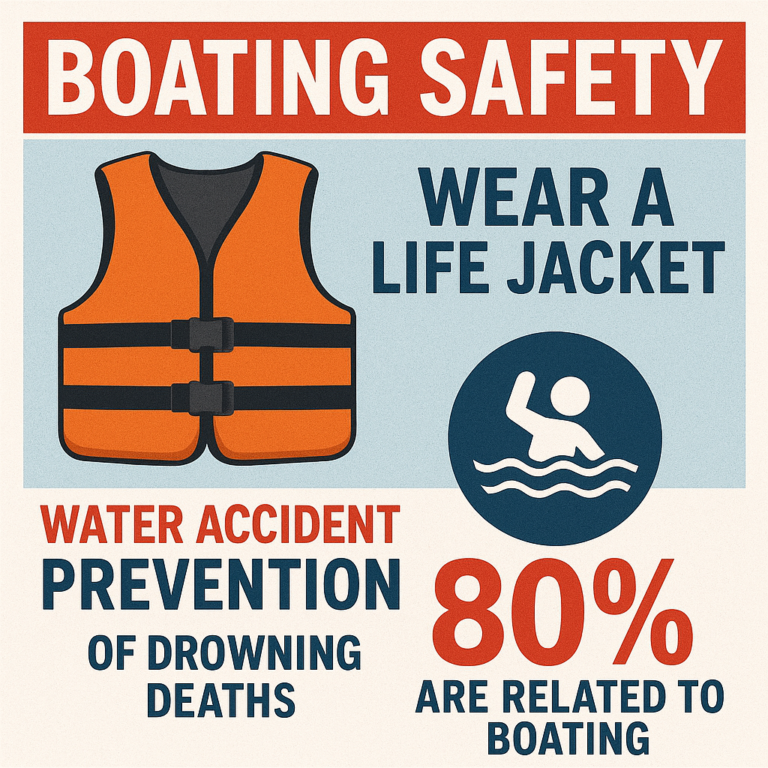
Drowning is the leading cause of most boating fatalities, and not wearing a life jacket can turn a fall overboard or capsize into a deadly emergency. The key distinction: drowning is the cause of death, while events such as capsizing, falling overboard, and collisions may start the chain of events.
Imagine a calm afternoon, a small boat, and one unexpected shift of weight. In seconds, someone can be in the water with no time to find a life jacket tucked beneath the seats. That’s why wearing a properly fitted PFD—not merely keeping one aboard—is one of the most important boating safety habits.
Key Takeaways
- Drowning is the leading cause of boating deaths; falls overboard and capsizing are among the emergencies that can lead to it.
- Wear a properly fitted, approved life jacket while underway. A life jacket is most useful when it’s already on.
- Alcohol, inattention, inexperience, unsafe speed, and poor weather decisions can raise the risk of a fatal incident.
- Statistics use different categories: cause of death, accident type, and contributing factor aren’t interchangeable.
- Prepare before leaving the dock: check conditions and safety equipment, balance the load, brief passengers, and choose a sober operator.
Table of Contents
- ⚡️ Quick Tips and Facts: What Causes Most Boating Fatalities?
- 🧭 Background: How Boating Fatality Causes Are Recorded
- 🚨 The Leading Causes of Boating Deaths
- 1. Drowning and Not Wearing a Life Jacket
- 2. Falling Overboard
- 3. Capsizing and Swamping
- 4. Alcohol and Drug Use
- 5. Operator Inattention and Inexperience
- 6. Excessive Speed and Unsafe Maneuvers
- 7. Collisions and Impact Injuries
- 8. Bad Weather, Cold Water, and Poor Visibility
- 9. Equipment Failure and Inadequate Preparation
- 🛟 Why Life Jackets Make Such a Difference
- 🍻 Alcohol, Boating, and Impaired Judgment
- 🌊 How Water Conditions and Boat Type Affect Risk
- ✅ How to Prevent Boating Accidents and Fatalities
- Before You Leave the Dock
- While Underway
- If Someone Falls Overboard or the Boat Capsizes
- 📋 Boating Safety Equipment and Emergency Checklist
- 🎓 Boating Safety Courses, Licenses, and Operator Training
- 📊 Boating Fatality Statistics: What the Numbers Can and Can’t Tell You
- Conclusion
- 🔗 Recommended Links
- ❓ FAQ
- What is the most common cause of boating fatalities?
- What percentage of boating deaths involve drowning?
- Do most boating fatalities happen to people who aren’t wearing life jackets?
- Does alcohol cause most boating accidents?
- Which boat types are involved in the most fatal accidents?
- What should you do if your boat capsizes?
- 📚 Reference Links
Quick Tips and Facts: What Causes Most Boating Fatalities?
The shortest accurate answer: drowning is the leading cause of boating fatalities, and not wearing a life jacket is a major preventable factor. For a closer look at the distinction between the fatal outcome and the events that lead to it, see our guide to what is the leading cause of boating fatalities?.
| Question | Practical answer |
|---|---|
| What causes the most boating deaths? | Drowning is the leading cause of death in recreational boating incidents reported by the U.S. Coast Guard. |
| What makes drowning more likely? | Not wearing a properly fitted, approved personal flotation device (PFD), especially after a fall overboard or capsize. |
| What incidents commonly lead to fatal emergencies? | Falls overboard, capsizing, swamping, sinking, and collisions. |
| What raises the risk? | Alcohol or drugs, inattention, inexperience, unsafe speed, poor weather judgment, and inadequate preparation. |
| What’s one action that helps immediately? | Wear a life jacket while underway. Having one somewhere onboard is not the same as wearing it. |
The exact rankings depend on what a source counts: drowning describes how someone died; capsize, falling overboard, or collision describes how the emergency began. Keeping those categories separate clears up much of the apparent disagreement among boating-safety articles.
Background: How Boating Fatality Causes Are Recorded

Boating safety statistics can sound contradictory until we look at the question being asked. An incident report may record the type of accident, such as a fall overboard, as well as the cause of death, such as drowning. Alcohol use, operator inattention, and cold water may be contributing factors rather than the incident category itself.
The U.S. Coast Guard’s annual Recreational Boating Statistics reports fatalities, injuries, accident types, and contributing factors. These categories overlap: a person can fall overboard from a small boat, without a life jacket, in cold water, while the operator is impaired. Each detail adds information, but none alone tells the whole story.
| Term | What it means | Example |
|---|---|---|
| Fatality cause | The immediate medical cause of death | Drowning |
| Accident type | The event that put someone in danger | Falling overboard or capsizing |
| Contributing factor | A condition or behavior that increased risk | Alcohol use, inattention, or unsafe loading |
| Prevention measure | An action intended to reduce risk or severity | Wearing a life jacket and keeping a proper lookout |
Different sources may also discuss different countries, years, vessels, or populations. For example, a Canadian boating-education page reports that “90% of those who drown while boating were not wearing a lifejacket or PFD”; that is a statistic about the population and reporting context covered by that source, not a universal percentage that should automatically be applied to U.S. data. Its broader safety point aligns with guidance from the U.S. Coast Guard: wearing an appropriate PFD can be crucial when an emergency happens suddenly.
The Leading Causes of Boating Deaths
The list below separates fatal outcomes from the emergencies and behaviors that can lead to them. Some categories overlap, and an incident can involve more than one.
1. Drowning and Not Wearing a Life Jacket
Drowning is the leading cause of boating fatalities. A fall overboard or capsize can leave a person in the water before they have time to find or put on a PFD. Cold, waves, injury, panic, and exhaustion can make it harder to stay afloat or reach the boat.
A life jacket works only if it is the right size, approved for the activity, in usable condition, and worn correctly. The Coast Guard explains the different types of life jackets and PFDs; state and federal rules may also require specific PFDs to be carried or worn in particular circumstances.
✅ Practical takeaway: Wear a properly fitted life jacket whenever you’re underway, especially on smaller boats, while boating alone, in rough or cold water, or when moving around the deck.
❌ Don’t count on putting it on after someone falls in. A person may be injured, disoriented, or unable to reach a stored PFD.
2. Falling Overboard
A fall overboard can turn a routine trip into an emergency in seconds. Movement around the boat, slippery surfaces, sudden wakes, fishing activity, and impaired balance can all contribute. A person who falls in may also be difficult to see, particularly in choppy water or low light.
To reduce the risk:
- Keep your weight low and move carefully, especially while underway.
- Use handholds and avoid standing on seats or gunwales.
- Keep passengers seated when speed or water conditions make movement unsafe.
- Wear a PFD; use an engine cut-off switch when required and appropriate.
- Tell passengers where the life jackets and emergency communication equipment are.
If someone goes overboard, the operator should alert everyone, keep the person in sight, slow and maneuver carefully, and call for help if needed. The U.S. Coast Guard’s man-overboard safety resources offer further guidance.
3. Capsizing and Swamping
A boat can capsize or swamp when water enters faster than it can be removed, or when it becomes unstable. Overloading, poor weight distribution, sudden movement, wakes, and rough conditions can all increase the risk, particularly in small open boats.
Before leaving:
- Check the vessel’s capacity plate and don’t exceed its limits.
- Distribute passengers, gear, and fuel sensibly.
- Secure loose equipment so it cannot shift suddenly.
- Keep passengers seated when crossing wakes or operating in rough water.
- Check the forecast and choose conditions suited to your vessel and experience.
If your boat capsizes, stay with it if it is safe to do so. A floating vessel is often easier for rescuers to find than a person in the water. Put on or hold onto a PFD, account for everyone, and use a whistle, radio, or other signaling device to summon help. The U.S. Coast Guard’s boating safety guidance recommends preparing for emergencies before they happen, not improvising after the boat turns turtle.
4. Alcohol and Drug Use
Alcohol and other impairing substances can affect balance, judgment, reaction time, and the ability to respond to changing conditions. Sun, wind, motion, and fatigue can compound the effects. That’s a risky combination when a person is operating a boat or moving around on deck.
Boating-education sources often cite alcohol as a factor in a significant share of fatal incidents, but the exact percentage varies by jurisdiction, year, and how reports classify alcohol involvement. For U.S. figures, use the applicable year’s Coast Guard statistics rather than assuming a statistic from another country or an undated article applies here.
Our firm recommendation: designate a sober operator. The operator should avoid alcohol and impairing drugs, keep a clear lookout, and be ready to make decisions. Passengers should also take care: intoxication can increase the chance of falling overboard or being injured.
5. Operator Inattention and Inexperience
An operator who is distracted, tired, unfamiliar with the vessel, or unsure of the rules may miss hazards and react too late. A proper lookout matters even on a calm, sunny day; clear weather does not prevent collisions, wake-related falls, or unexpected changes in traffic.
Before taking the helm:
- Learn the boat’s steering, throttle, stopping distance, and emergency controls.
- Review navigation rules and local hazards.
- Assign someone to help watch for traffic, swimmers, and obstacles.
- Keep phones and other distractions out of the operator’s hands.
- Slow down when visibility, traffic, or experience calls for it.
Training can help close knowledge gaps. America’s Boating Club offers boating education and local learning opportunities, while the Boat Ed safety courses provide state-specific boating information.
6. Excessive Speed and Unsafe Maneuvers
Speed leaves less time to see, judge, and avoid danger. It can also make turns and wake crossings more hazardous, especially with passengers standing or equipment unsecured. A boat that feels manageable in open water may become hard to control in a narrow channel, crowded harbor, or busy swimming area.
Operate at a speed that lets you:
- Keep a proper lookout and maintain control.
- Avoid creating a dangerous wake.
- Respond safely to traffic, swimmers, markers, and sudden hazards.
- Follow posted restrictions and local navigation rules.
The U.S. Coast Guard’s navigation rules explain the responsibilities boat operators have to avoid collisions. A clear day is no excuse to stop paying attention.
7. Collisions and Impact Injuries
Collisions can involve another vessel, a fixed object, or a floating hazard. Some result in drowning; others cause serious injury from impact. Contributing factors can include inattention, poor lookout, unsafe speed, alcohol, and failure to follow navigation rules.
Keep a lookout in every direction, understand right-of-way rules, and avoid assuming that another operator sees you. At night or in reduced visibility, use required navigation lights and proceed cautiously. The U.S. Coast Guard navigation rules are a useful reference, but a course and practical instruction are better preparation than trying to learn them during a close call.
8. Bad Weather, Cold Water, and Poor Visibility
Weather and water conditions can change the severity of an accident. Wind can build waves, fog can hide hazards, and cold water can impair a person who falls in. Even a capable boat has limits, and conditions that are manageable for one vessel may be dangerous for another.
Before departure, check a trusted marine forecast, including warnings, wind, waves, and visibility. The National Weather Service marine forecasts provide official U.S. marine weather information.
If conditions worsen, turn back or seek shelter early. Waiting until the boat is difficult to control narows your options.
9. Equipment Failure and Inadequate Preparation
Mechanical trouble does not always cause a fatality by itself, but it can leave a boat stranded or make a worsening situation harder to manage. A dead battery, fuel issue, damaged steering, failed bilge pump, or missing communication device can complicate an emergency.
Preparation should include:
- A pre-departure inspection of the hull, engine, steering, fuel, and batteries.
- Working communication and signaling equipment appropriate to the trip.
- Required safety gear in accessible, serviceable condition.
- A float plan shared with someone ashore.
- A passenger briefing about life jackets, emergency equipment, and what to do if someone falls overboard.
The U.S. Coast Guard boating safety checklist and BoatUS safety resources can help you build a practical routine.
Why Life Jackets Make Such a Difference
A life jacket is most valuable when it is already being worn. A sudden capsize, fall, or injury may leave little time to locate one, put it on, and fasten it correctly. The Coast Guard provides guidance on chosing and wearing a life jacket, including the need for an appropriate fit and suitable type.
| PFD check | What to look for |
|---|---|
| Approval | A label showing it is approved for its intended use |
| Fit | Correct size for the wearer; snug without restricting breathing or movement |
| Condition | No tears, broken straps, damaged closures, or signs of deterioration |
| Accessibility | Easy to reach, not buried under gear |
| Use | Worn properly, with closures fastened |
For children, fit matters especially. Choose a child-sized PFD designed for their weight and activity, and supervise them closely. Never rely on an adult-size jacket as a substitute for a properly fitted child’s PFD.
A PFD isn’t a force field. It cannot prevent a collision or replace good judgment. But it can help keep a person afloat after an emergency, buying valuable time for rescue.
Alcohol, Boating, and Impaired Judgment
Alcohol raises risk in two ways: it can impair the operator’s decisions, and it can make passengers less steady and less able to respond to a fall or emergency. It can also make heat, sun, motion, and fatigue feel deceptively manageable.
A Canadian boating-safety resource says alcohol is involved in about one-third of boating fatalities, while the U.S. Coast Guard publishes its own annual figures for U.S. incidents. These statistics should not be treated as interchangeable: reporting methods, populations, years, and definitions can differ.
Our advice is simple:
- Choose a sober operator before departure.
- Don’t hand the helm to someone who has been drinking or using impairing substances.
- Keep passengers seated and wearing PFDs when conditions call for it.
- Have a sober person help monitor children, swimmers, and anyone who may be unsteady.
The fun of a day on the water should not depend on someone taking an unnecessary risk. Save the celebratory drink for after the boat is safely secured.
How Water Conditions and Boat Type Affect Risk
The same hazard can have different consequences depending on boat size, design, load, passenger behavior, and conditions. A small open boat may have less reserve buoyancy and less shelter from waves than a larger vessel, but no boat size makes careless operation safe.
| Risk factor | Why it matters | Helpful response |
|---|---|---|
| Small or open vessel | Passengers may be more exposed to waves and falls | Wear PFDs, balance the load, and check conditions |
| Overloading | Can reduce stability and freeboard | Follow the capacity plate and secure gear |
| Cold water | Can quickly make staying afloat and self-rescue harder | Wear a PFD and check water temperature and forecast |
| Crowded waterways | More traffic and less room to maneuver | Keep a lookout and reduce speed |
| Night or poor visibility | Hazards and other vessels are harder to see | Use required lights and proceed cautiously |
| Unfamiliar boat | Controls and stopping behavior may differ | Practice before carrying passengers or entering traffic |
In the competitor summaries, the first video is described as emphasizing alcohol, operator error, collisions, and life-jacket use. Those points are relevant, but its figures should be checked against dated, authoritative reports before being repeated as current facts. A video’s ranking can differ from a Coast Guard ranking because “most common accident,” “leading fatality cause,” and “contributing factor” are different measures.
How to Prevent Boating Accidents and Fatalities
Before You Leave the Dock
A short pre-departure routine can catch problems while you still have easy alternatives.
- Check the weather and water conditions. Review marine forecasts and warnings, and be honest about the boat’s capabilities and your experience.
- Inspect the boat. Check the hull, engine, steering, fuel, battery, and bilge system.
- Check required safety equipment. Confirm PFDs fit, are accessible, and are in good condition. Check communication and signaling gear.
- Balance passengers and cargo. Follow the capacity plate, distribute weight evenly, and secure loose items.
- Tell someone your plan. Share your route, destination, expected return time, and a contact plan.
- Brief passengers. Show them where life jackets and emergency gear are and explain what to do if someone falls overboard.
- Choose a sober operator. Make the decision before anyone starts drinking.
The Coast Guard’s boating safety guidance and BoatUS float plan information can help turn this into a repeatable habit.
While Underway
- Keep a continuous lookout; don’t let phones, music, or conversation take over the operator’s attention.
- Wear PFDs when underway, particularly on small boats or in conditions where a fall could be dangerous.
- Use a safe speed for traffic, visibility, water conditions, and maneuvering room.
- Keep passengers seated when the boat is moving or crossing wakes.
- Reassess weather and conditions as the trip continues.
- Avoid alcohol and impairing drugs for the operator.
- Follow navigation rules and local restrictions.
If Someone Falls Overboard or the Boat Capsizes
For a person overboard:
- Shout “person overboard” and keep the person in sight.
- Assign someone to point continuously at them.
- Slow down and maneuver carefully to avoid striking them with the boat or propeller.
- Bring the person aboard as safely as possible.
- Call for help using the appropriate communication equipment if rescue is needed.
For a capsize or swamping:
- Account for everyone immediately.
- Put on or hold onto a PFD.
- Stay with the boat if it is safe; it can provide flotation and help rescuers find you.
- Use a whistle, radio, or visual signal to attract attention.
- Don’t attempt a risky swim to shore unless remaining with the boat presents a greater immediate danger.
Practice and passenger briefing matter. In a real emergency, people rarely have the spare attention to search for instructions or equipment they have never seen before.
Boating Safety Equipment and Emergency Checklist
Requirements vary by boat type, location, and activity, so verify the rules that apply to your trip. The Coast Guard’s required equipment guidance is a useful starting point for U.S. recreational boaters.
| Equipment | Why it matters | Before departure |
|---|---|---|
| Wearable PFDs | Help keep people afloat after a fall or capsize | Check fit, condition, approval, and access |
| Throwable flotation device | Can be thrown to someone in the water | Keep it accessible and ready |
| Sound-producing device | Helps signal nearby boats or rescuers | Check that it works and is reachable |
| Visual distress signals | Help rescuers locate you when appropriate | Check requirements, expiration, and storage |
| Fire extinguisher | Helps address a small onboard fire | Verify type, condition, and accessibility |
| Marine radio or suitable communications | Helps summon assistance | Check power, operation, and coverage for your route |
| Navigation lights | Help other vessels see and identify your boat | Test before operating in darkness or reduced visibility |
| First-aid kit | Supports care for minor injuries while help is arranged | Check supplies and water resistance |
| Bilge pump and backup plan | Helps remove water from the vessel | Test the pump and inspect the intake and switch |
A piece of safety gear that is broken, expired, buried, or unfamiliar may be little help when time is short. Check it, reach it, and know how to use it.
Boating Safety Courses, Licenses, and Operator Training
Boating education helps operators build skills in navigation, rules of the road, weather awareness, boat handling, and emergency response. Requirements differ by state and operator, so check local rules through the National Association of State Boating Law Administrators.
Learning options include:
- America’s Boating Club courses
- Boat Ed state boating safety courses
- U.S. Coast Guard Auxiliary boating courses
- On-water practice with a qualified instructor or experienced operator
A course is not a substitute for judgment, and a card does not make someone an expert. Think of training as a starting point: practice with the boat you’ll actually use, learn its controls, and build experience gradually.
Boating Fatality Statistics: What the Numbers Can and Can’t Tell You
Statistics are useful, but only when we know what they count. “Most common accident,” “leading cause of death,” and “most frequent contributing factor” are not interchangeable statements.
| Claim type | What it answers | What it does not automatically answer |
|---|---|---|
| Leading cause of death | How victims died | What event began the emergency |
| Most frequent accident type | What kinds of incidents were reported most often | Which type caused the most deaths |
| Contributing factor | What may have increased risk | Whether that factor was the sole cause |
| Percentage from one year or country | What was recorded in that reporting group | What is true for every year or region |
The U.S. Coast Guard’s annual statistics are the best place to verify U.S. figures for a particular year. For Canadian claims, consult the relevant Canadian boating-safety source and keep its population and definitions attached to the statistic.
The same caution applies to video summaries. One video may describe alcohol as the leading known factor in fatal accidents, while another source identifies drowning as the leading cause of fatalities. These statements may refer to different statistical categories: alcohol can be a contributing factor, while drowning is the fatal outcome. When a source gives a percentage, check the date, geography, denominator, and definition before treating it as a general rule.
How We Read Competing Boating-Safety Claims
- Give priority to dated, official datasets for current statistics.
- Use safety-education organizations for practical advice, while checking whether their figures are clearly sourced.
- Keep the category attached to the number: fatality, accident, injury, or contributing factor.
- Avoid treating a statistic from another country or year as a current U.S. estimate.
- Look for agreement on prevention: across sources, wearing a PFD, staying alert, avoiding impairment, preparing the vessel, and learning emergency procedures are recurring recommendations.
We opened with the question of what causes most boating fatalities. The clearest answer remains: drowning is the leading cause of death, and wearing a life jacket can help address one of the most preventable risks. The surrounding emergency may be a fall, capsize, swamping, or collision; the safer outcome starts well before anyone enters the water.