Support our educational content for free when you purchase through links on our site. Learn more
🚨 10 Major Contributors to Fatal Boating Accidents

Which of these is major contribution to fatal boating accidents? Alcohol use is a leading known contributing factor in fatal recreational boating accidents, while drowning is the leading cause of death. They describe different parts of the same tragedy: a behavior can contribute to an accident, while drowning may be its fatal outcome.
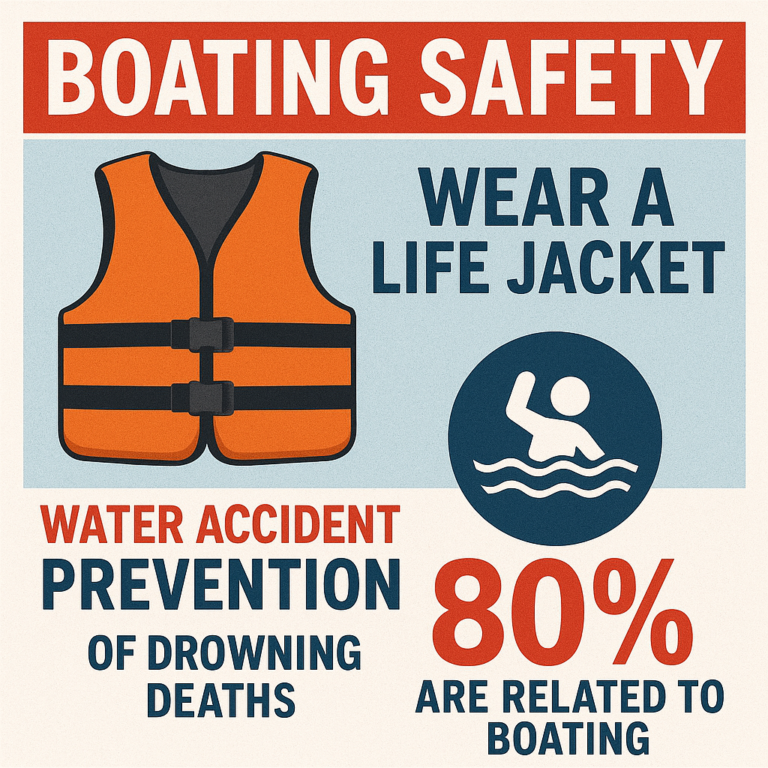
The numbers put the risk in perspective: the U.S. Coast Guard recorded 556 recreational boating deaths in 2024. And many drowning victims were not wearing a life jacket. A calm afternoon can turn quickly when a wake catches an unseated passenger or a distracted operator misses a hazard—so the safest move is to wear a PFD, stay alert, and keep the skipper sober.
Key Takeaways
- Alcohol is a leading known contributing factor in fatal boating accidents; the operator should stay sober.
- Drowning is the leading cause of boating deaths, and wearing a properly fitted life jacket can reduce risk.
- Other major contributors include inattention, improper lookout, excessive speed, inexperience, capsizing, falls overboard, hazardous conditions, overloading, and equipment problems.
- Many fatal accidents are preventable: check conditions and gear, follow capacity limits, keep passengers seated, and maintain a proper lookout.
Table of Contents
- ⚡️ Quick Tips and Facts: Major Contributors to Fatal Boating Accidents
- 🧭 What Does “Major Contribution” Mean in Boating Accident Statistics?
- 📊 How U.S. Boating Fatality Data Is Colected
- 🚨 10 Major Contributors to Fatal Boating Accidents
- 1. Not Wearing a Life Jacket
- 2. Alcohol and Drug Impairment
- 3. Operator Inattention
- 4. Improper Lookout
- 5. Excessive Speed and Unsafe Operation
- 6. Operator Inexperience and Lack of Boating Education
- 7. Capsizing and Falls Overboard
- 8. Poor Weather and Hazardous Water Conditions
- 9. Overloading and Improper Weight Distribution
- 10. Equipment Failure and Inadequate Preparation
- 🌊 Why Drowning Is the Leading Cause of Boating Deaths
- 🛟 How Life Jackets Prevent Fatalities
- 🧠 Human Factors: Fatigue, Distraction, and Cold-Water Shock
- 🚤 Risk Factors by Boat Type and Activity
- Open Motorboats and Personal Watercraft
- Paddling, Fishing, and Small-Boat Trips
- Sailboats and Larger Recreational Vessels
- ✅ How to Prevent Fatal Boating Accidents
- Before You Leave the Dock
- While Underway
- If Someone Falls Overboard or the Boat Capsizes
- 📋 Boating Safety Checklist for Operators and Passengers
- ⚖️ Boating Laws, Required Safety Equipment, and Operator Responsibility
- 🔎 Conclusion
- 🔗 Recommended Links
- ❓ FAQ: Fatal Boating Accident Causes
- What is the major contribution to fatal boating accidents?
- What is the leading cause of death in boating accidents?
- Does alcohol increase the risk of a fatal boating accident?
- Are most boating fatalities preventable?
- What should you do first if your boat capsizes?
- 📚 Reference Links
⚡️ Quick Tips and Facts: Major Contributors to Fatal Boating Accidents
If you’re asking which factor most often contributes to fatal boating accidents, the answer depends on what you mean by “cause.” U.S. Coast Guard reports distinguish between the event that happened—such as a person falling overboard—and the contributing factor—such as alcohol use, inattention, or not wearing a life jacket. For the related question of what most often causes boating fatalities, see our guide to what is the leading cause of boating fatalities?.
For U.S. data, the Coast Guard’s 2024 Recreational Boating Statistics reports 556 boating deaths. Sea Tow describes boating under the influence as the leading known contributing factor in fatal accidents, while Coast Guard data also show that drowning is the leading cause of death and that many drowning victims were not wearing life jackets. These statements answer different questions, so they aren’t necessarily in conflict.
| Question | Helpful short answer |
|---|---|
| What is a leading known contributing factor in fatal accidents? | Boating under the influence (BUI), according to Sea Tow’s summary of 2024 Coast Guard data. |
| What is the leading cause of death in fatal boating incidents? | Drowning is the leading cause of death reported by the Coast Guard. |
| What commonly makes a fall overboard or capsize fatal? | Not wearing a life jacket, combined with cold water, injury, difficulty reboarding, or delayed rescue. |
| What other preventable factors raise risk? | Inattention, improper lookout, operator inexperience, excessive speed, unsafe passenger positioning, and hazardous weather or water. |
Our take from time on the water: the biggest danger is rarely one dramatic mistake. It’s often a chain—someone is distracted, the boat moves unexpectedly, a passenger goes over, and nobody has a life jacket on. One link breaks the chain; a wearable PFD is a particularly powerful one.
- ✅ Wear a properly fitted, serviceable life jacket—before the boat starts moving.
- ✅ Keep the operator sober and alert; designate a sober skipper.
- ✅ Assign a lookout, especially in busy water, at night, or in restricted visibility.
- ✅ Check the forecast and conditions, and slow down when visibility or water gets rough.
- ❌ Don’t assume calm water means no risk. Many accidents happen in ordinary-looking conditions.
- ❌ Don’t rely on life jackets stored in a locker. They can’t help if nobody has time to put one on.
🧭 What Does “Major Contribution” Mean in Boating Accident Statistics?
The phrase “major contribution to fatal boating accidents” can refer to several different statistics. Mixing them up leads to a familiar dockside argument: “Alcohol is the main cause!” “No, it’s drowning!” “No, people falling overboard!” Each may be describing a different part of the same event.
Accident type, contributing factor, and cause of death
| Term | What it describes | Example |
|---|---|---|
| Accident type | The event or mechanism recorded in a report | A person falls overboard; a vessel capsizes |
| Contributing factor | A condition or behavior linked to the event | Alcohol use, inattention, excessive speed |
| Cause of death | The fatal injury or outcome | Drowning, trauma, hypothermia |
A fall overboard is an accident type. Alcohol may be a contributing factor. Drowning may be the cause of death. Those facts can all describe one fatal incident without competing with one another.
The U.S. Coast Guard’s boating statistics are the primary source for national recreational boating accident data. Reports reflect cases that meet reporting requirements and include available information—not every close call or unreported incident.
Why “the most common” and “the deadliest” aren’t the same
A frequent accident type may cause many injuries but relatively few deaths per incident. A less frequent event can be more lethal when it occurs. For example, a 2021 data analysis summarized by RW&B Lawyers reported a much higher fatality proportion for falls overboard than for collisions between recreational vessels. Those figures are specific to that year, dataset, and categories; don’t treat them as a current-year risk forecast.
The practical distinction is:
- Most frequent asks: “Which event happens most often?”
- Most deadly overall asks: “Which event accounts for the most deaths?”
- Highest fatality rate asks: “Among recorded events of this type, what share resulted in death?”
- Leading contributing factor asks: “Which reported behavior or condition was most often associated with fatal accidents?”
Different questions can produce different answers. That’s why we look at the Coast Guard report first, then use secondary explanations—such as Sea Tow’s overview of primary fatality contributors—for context.
📊 How U.S. Boating Fatality Data Is Colected
The Coast Guard compiles boating accident reports submitted through state and territorial authorities. The annual report summarizes incidents, deaths, injuries, vessel types, accident events, and contributing factors. The numbers are valuable, but they’re not a perfect camera pointed at every accident.
What the data can—and cannot—tell you
| Data strength | What to keep in mind |
|---|---|
| National reporting framework | State and territorial reporting feeds the national database. |
| Useful categories | Reports distinguish events such as falls overboard, collisions, and capsizing from contributing factors such as alcohol or inattention. |
| Annual snapshot | Counts and rankings can change from year to year. |
| Not every incident is captured | Reporting requirements and available evidence affect what appears in the dataset. |
| “Unknown” is a real category | A factor may not be established, even after an investigation. |
The Coast Guard’s 2024 report recorded 3,887 reported incidents, 556 deaths, and 2,170 injuries. Sea Tow notes that alcohol was involved in roughly one in five boating deaths in 2024. Treat that as a reported association, not proof that alcohol was the only cause in each case.
Why different sources quote different numbers
You may encounter claims such as “one-third of boating fatalities involve alcohol” alongside a newer estimate closer to one-fifth. That difference can reflect:
- Different reporting years
- Whether the statistic counts all deaths, fatal accidents, or only cases with known contributing factors
- Different definitions of alcohol involvement
- Changes in data collection and the number of cases where a factor was unknown
Older learning materials, including Boat-Ed’s causes-of-accidents guide, are useful for basic safety principles, but its Canada-focused figures should not be presented as current U.S. statistics. When numbers disagree, check the year, location, denominator, and definition before deciding which is relevant.
🚨 10 Major Contributors to Fatal Boating Accidents
There isn’t one single mistake behind every fatal accident. These ten factors show how operator behavior, water conditions, boat setup, and safety equipment can combine.
| Contributor | How it raises risk | Practical prevention |
|---|---|---|
| Not wearing a life jacket | A person in the water may drown before rescue or reboarding | Wear a fitted, Coast Guard-approved PFD |
| Alcohol or drugs | Impairs judgment, balance, reaction time, and decisions | Keep the operator sober |
| Inattention | Delays hazard detection and response | Put away distractions; focus on operating |
| Improper lookout | Other vessels, swimmers, debris, or markers go unseen | Assign a dedicated lookout |
| Excessive speed or unsafe operation | Reduces time to react and increases impact severity | Slow for visibility, traffic, and conditions |
| Inexperience | Makes emergencies and changing conditions harder to manage | Take an approved boating safety course |
| Falls overboard and capsizing | Can place people in the water unexpectedly | Stay seated, balance loads, wear PFDs |
| Poor weather or hazardous water | Wind, waves, current, and low visibility can overwhelm a craft | Check forecasts and turn back early |
| Overloading or poor weight distribution | Reduces stability and freeboard | Follow capacity limits; distribute weight low and evenly |
| Equipment failure and poor preparation | Can turn a manageable problem into a rescue emergency | Inspect the boat and safety gear before departure |
1. Not Wearing a Life Jacket
A life jacket is most useful when it’s already on. The Coast Guard reports that a large majority of people who drowned in recreational boating incidents were not wearing a life jacket; consult the latest Coast Guard statistics for the exact figure and year. Older safety materials may quote a figure such as 90%, while more recent summaries report more than 85%. The precise percentage varies by reporting period, but the lesson is steady: not wearing a PFD is a major, preventable risk.
A stored jacket can be difficult to reach after a capsize, injury, or sudden fall. Cold water also robs strength and coordination faster than many people expect. We’ve seen experienced boaters treat a short run to the next cove as “not worth putting it on.” That’s exactly when a surprise wake can make the decision for you.
- Choose a U.S. Coast Guard-approved PFD suited to the activity.
- Check fit and condition; a loose or damaged jacket may not perform properly.
- Use an appropriate wearable PFD for each person, including children.
- Consider an inherently buoyant vest if inflatable models are unsuitable for the wearer or activity.
For guidance, see the Coast Guard’s life jacket safety information and the National Safe Boating Council’s life jacket resources.
2. Alcohol and Drug Impairment
Alcohol affects judgment, coordination, vision, and reaction time. On the water, those effects can be magnified by sun, wind, motion, heat, noise, and fatigue. A person who feels “fine” may still be less able to spot a hazard or react to a sudden course change.
Sea Tow identifies boating under the influence as the leading known contributing factor in fatal boating accidents in its discussion of 2024 data. Federal law prohibits operating a recreational vessel while intoxicated, and states have their own enforcement and penalties. See the U.S. Coast Guard’s boating under the influence guidance.
Our recommendation is simple: the skipper stays sober. If passengers are drinking, establish that boundary before leaving the dock—not halfway through a busy channel.
3. Operator Inattention
A wake, floating debris, another boat changing course, or a swimmer near a dock can appear quickly. Inattention narows the time available to respond. Distraction can come from phones, music, conversation, fishing gear, navigation screens, or trying to manage several tasks at once.
- Keep the operator focused on the route and surrounding traffic.
- Stop or reduce speed before handling a device or changing navigation settings.
- Give passengers clear jobs, but don’t let casual conversation become the skipper’s second helm.
- Use a designated lookout when the operator needs to check charts or equipment.
4. Improper Lookout
A proper lookout means actively watching and listening for hazards—not merely assuming the boat ahead will move. The U.S. Coast Guard Navigation Rules require vessels to maintain a proper lookout by sight, hearing, and all available means appropriate to the conditions.
A calm day can still be a collision day. Boat-Ed’s safety material notes that collisions can happen in daylight and clear conditions. Clear skies don’t remove blind spots, traffic, swimmers, or unexpected maneuvers. Assigning one passenger as lookout for a narrow passage or crowded anchorage is a small step with real value.
5. Excessive Speed and Unsafe Operation
Speed is not just a number on the throttle. It determines how much time you have to spot and avoid a hazard, and how hard a collision or ejection may be. A speed that feels comfortable in open water may be reckless around docks, swimmers, restricted visibility, or heavy traffic.
- Follow posted speed and no-wake rules.
- Reduce speed in fog, darkness, rough water, crowded areas, and near shore.
- Account for stopping distance and the boat’s handling—not just the speed over ground.
- Avoid sharp turns or abrupt maneuvers with passengers standing or moving about.
For rules and safe navigation basics, use the Coast Guard’s Navigation Rules and your state boating agency’s requirements.
6. Operator Inexperience and Lack of Boating Education
A boat responds differently from a car. Wind and current continue to move it even when the throttle is reduced, and stopping distance can surprise first-time operators. Inexperience can also make it harder to recognize weather changes, read markers, manage a person overboard, or handle an engine failure.
A boating safety course teaches rules and practical decision-making before you need them. Find courses through the National Association of State Boating Law Administrators or your state’s boating agency.
- Learn the local navigation markers and right-of-way rules.
- Practice low-speed docking in a quiet area.
- Review emergency procedures with passengers.
- Check operator-age and education requirements for your state.
7. Capsizing and Falls Overboard
A fall overboard or capsize can become fatal quickly, especially when occupants aren’t wearing life jackets. Small boats, shifting loads, sudden wakes, standing passengers, and bad weather can all reduce stability.
The Boat-Ed safety guide highlights falling overboard, capsizing, swamping, and sinking among major accident events. These are categories of what happened—not necessarily the behavior or condition that caused it.
To reduce risk:
- Keep passengers seated while underway.
- Keep weight low and centered; avoid leaning over one side.
- Don’t ride on the bow, gunwale, or transom unless the boat is designed and approved for it.
- Make sure everyone knows where the throwable flotation device is.
- Practice a person-overboard response before the day you need it.
8. Poor Weather and Hazardous Water Conditions
A forecast is not a promise. Wind can build, thunderstorms can approach, and wakes or currents can make a small craft unstable. The National Weather Service advises boaters to monitor marine forecasts and changing conditions; check its marine and coastal weather resources.
Before departure, look beyond the departure point:
- Check the forecast for the entire trip, including the return.
- Identify likely wind direction, storm timing, and any advisories.
- Ask whether your boat and crew can handle the expected conditions.
- Keep monitoring the sky and water.
- Turn back or seek shelter while you still have comfortable options.
We’ve watched a pleasant morning turn into a bumpy ride home because the group planned around the outgoing trip and forgot the return. The forecast doesn’t care which direction you’re going.
9. Overloading and Improper Weight Distribution
Too many people, too much gear, or weight piled high can make a boat unstable. Improper loading was associated with a high fatality proportion in one 2021 Coast Guard-data analysis, but those historical figures shouldn’t be treated as current-year rates. The safety principle is timeless: capacity limits exist for a reason.
- Read the capacity plate where fitted and follow the manufacturer’s limits.
- Distribute passengers and gear evenly.
- Keep heavy equipment low and secured.
- Leave room for people to move safely without crowding one side.
- Reassess the load after adding fuel, coolers, fishing gear, or extra passengers.
10. Equipment Failure and Inadequate Preparation
Mechanical problems may not be the initial cause of an accident, but they can make one worse. A failed engine near rocks, a dead battery, or a missing distress signal can turn a minor problem into an emergency.
Before departure, inspect:
- Fuel level and engine condition
- Battery, steering, and controls
- Navigation lights and sound-producing device
- Bilge pump and drain plug
- Fire extinguisher where required
- Communication equipment and emergency signaling devices
- Life jackets and throwable flotation device
The Coast Guard’s required safety equipment overview is a useful starting point. Requirements vary with vessel type, size, and operating area, so check applicable state and federal rules.
🌊 Why Drowning Is the Leading Cause of Boating Deaths
Drowning is the leading cause of death in recreational boating accidents. That is an outcome, not a single root cause. Someone may drown after falling overboard, capsizing, being injured in a collision, or becoming trapped after a vessel swamps.
A life jacket helps keep a person afloat, but it cannot prevent every death. Severe injury, unconsciousness, entrapment, cold water, or delayed rescue can still be fatal. That’s why the best protection is layered:
- Wear a PFD.
- Avoid alcohol and unsafe passenger positions.
- Keep the operator attentive.
- Carry suitable communication and signaling equipment.
- Know how to respond to a person overboard.
The Coast Guard’s boating safety and life jacket guidance offers practical prevention advice. The simplest rule remains hard to improve: put the life jacket on before you need it.
🛟 How Life Jackets Prevent Fatalities
A life jacket provides buoyancy that can help keep the wearer’s airway above water. That matters if someone is tired, injured, shocked, or unable to swim effectively. It is not a substitute for training, supervision, or rescue equipment, but it can buy precious time.
| PFD choice | Common use | Advantages | Considerations |
|---|---|---|---|
| Type I offshore vest | Offshore or rough conditions | High buoyancy; designed for demanding environments | Bulkier; fit still matters |
| Type II near-shore vest | General recreational use | Supports many wearers face-up | Not ideal for every wearer or condition |
| Type III flotation aid | Paddling, fishing, and general recreation | Comfortable and available in activity-specific designs | Requires active wearer to maintain a safe position |
| Type V special-use device | Specific activities or work | Designed for a defined use | Must be used as labeled to meet requirements |
| Throwable device | Backup for a person in the water | Can be thrown quickly to someone nearby | Not a substitute for a wearable PFD |
The U.S. Coast Guard explains approval and use on its life jacket information page. Always check the label, fit, condition, and activity guidance.
A quick fit check:
- Fasten every buckle and zipper.
- Tighten straps so the vest fits snugly.
- Lift gently at the shoulders; it should not ride up over the wearer’s face.
- Confirm that the size and weight range fit the person.
- Replace damaged, waterlogged, or otherwise compromised equipment.
🧠 Human Factors: Fatigue, Distraction, and Cold-Water Shock
Boating safety isn’t only about boat handling. It’s also about how people think and react under stress.
Fatigue and distraction
Long days in the sun, vibration, noise, and poor sleep can make it harder to concentrate. Phones and onboard tasks compete for attention. If the operator is tired, take a break or hand over control only to a capable, qualified person who understands the boat.
Cold water and unexpected immersion
Cold water can cause an involuntary gasp and make swimming or coordinated movement harder. Even strong swimmers may struggle to stay effective after an unexpected fall. The National Weather Service’s cold-water safety guidance explains why cold-water immersion deserves respect.
- Dress for water temperature, not just air temperature.
- Wear a PFD, especially in small craft and in cold conditions.
- Keep spare dry clothing protected in a waterproof bag.
- Know the nearest safe landing or recovery point.
The chain-of-events effect
Consider a fishing trip: a passenger stands to reach a rod, the operator glances at a phone, a wake hits, and the passenger goes overboard. No single detail sounds extraordinary. Together, they create a high-risk moment.
That’s why our team favors simple rules that prevent multiple links in the chain: operator stays attentive, passengers stay seated, and everyone wears a life jacket.
🚤 Risk Factors by Boat Type and Activity
No boat type is automatically safe or unsafe. Size, design, weather, operator skill, passenger behavior, and use all matter. The Coast Guard’s annual report tracks accident and fatality information by vessel type; review the latest report for year-specific comparisons.
| Vessel or activity | Common risk pattern | Helpful precautions |
|---|---|---|
| Open motorboat | Exposure to wakes, weather, and passenger movement | Wear PFDs; keep weight balanced; slow down |
| Personal watercraft | High speed, falls, and close-quarters maneuvers | Wear an approved PFD; keep a safe distance; follow local rules |
| Cabin motorboat | Weather exposure may be reduced, but visibility and machinery risks remain | Maintain a lookout; check ventilation and equipment |
| Paddlecraft and small fishing boats | Swamping, cold-water immersion, and difficult reboarding | Wear a PFD; check conditions; carry communication gear |
| Sailboat | Heel, shifting loads, riging, and man-overboard risk | Secure gear; wear harness/PFD as appropriate; brief crew |
Open Motorboats and Personal Watercraft
Open boats give passengers less protection from spray, wind, and changing weather. Personal watercraft add speed and maneuverability, which can leave less room for mistakes in crowded areas. Wear a PFD, keep a safe following distance, and never assume another operator sees you.
Paddling, Fishing, and Small-Boat Trips
Small craft can be more vulnerable to wakes, wind, and sudden weather changes. Fishing adds tasks that can pull attention away from balance and surroundings. Stow gear so it won’t snag or shift, remain seated while underway, and avoid launching into conditions beyond the least experienced person’s ability.
Sailboats and Larger Recreational Vessels
Larger vessels may offer more shelter, but they still require a vigilant lookout, competent crew, and a clear plan for man-overboard incidents. On sailboats, sudden maneuvers, changing wind, and moving lines can create hazards. Brief passengers on where to sit and what to avoid touching.
For boat selection and ownership guidance, explore Boat Brands™ resources on boat manufacturers, boat buying, and boating lifestyle.
✅ How to Prevent Fatal Boating Accidents
The strongest prevention plan is not complicated. It is consistent. Wear the PFD, keep the operator sober, pay attention, and adapt to the conditions.
Before You Leave the Dock
Use this step-by-step routine:
- Check the forecast for the full trip and the return journey.
- Inspect the boat—fuel, battery, steering, engine, drain plug, bilge, and lights.
- Confirm safety equipment is present, accessible, and suitable for the vessel.
- Fit life jackets to every passenger before departure.
- Review the route, hazards, local rules, and expected travel time.
- Name the sober operator and set a no-alcohol rule for that person.
- Brief passengers on seating, emergency equipment, and what to do if someone falls overboard.
The U.S. Coast Guard’s safety checklist and BoatUS Foundation boating safety resources can help you build a routine.
While Underway
- Keep a proper lookout and maintain safe speed.
- Stay clear of swimmers, paddlers, docks, and restricted areas.
- Keep passengers seated and distribute weight evenly.
- Reduce distractions; handle charts and phones when stopped or safely idling.
- Watch wind, waves, visibility, and cloud development.
- Reassess the plan when conditions change. Turning back is good seamanship, not a defeat.
If Someone Falls Overboard or the Boat Capsizes
The details depend on the boat and situation, but these actions are broadly useful:
- Shout “person overboard” and keep the person in sight.
- Assign one person to point continuously at the person in the water.
- Slow down and maneuver carefully; avoid creating a propeller hazard.
- Throw flotation if it can be done safely.
- Call for help using the appropriate emergency channel or local emergency number.
- Recover the person using a safe method suited to the boat and their condition.
- If the boat capsizes, stay with the vessel if it is safe to do so and follow local rescue guidance rather than attempting a long swim.
Practice the response before an emergency. In a real incident, a preassigned job—“you point, you call, I maneuver”—beats three people shouting three different plans.
📋 Boating Safety Checklist for Operators and Passengers
| Check | Operator | Passenger |
|---|---|---|
| Everyone has a correctly fitted, serviceable life jacket | ✅ | ✅ |
| Operator is sober, rested, and capable | ✅ | |
| Forecast and water conditions checked | ✅ | |
| Boat capacity and weight distribution confirmed | ✅ | |
| Required safety gear is aboard and accessible | ✅ | |
| Route and return plan shared with someone ashore | ✅ | |
| Passengers remain seated while underway | ✅ | |
| Emergency signals and flotation device locations explained | ✅ | ✅ |
| Phones and devices don’t distract the operator | ✅ | ✅ |
| Conditions are monitored throughout the trip | ✅ | ✅ |
Before departure, tell someone ashore where you’re going and when you expect to return. A float plan can help rescuers if you don’t arrive. See the U.S. Coast Guard’s float plan resources.
⚖️ Boating Laws, Required Safety Equipment, and Operator Responsibility
Federal and state requirements differ based on vessel type, size, location, and activity. A life jacket may be legally required to be aboard even when adult passengers aren’t required to wear it in every circumstance. Legal minimums are not the same as the safest choice.
Check:
- Federal equipment requirements at the U.S. Coast Guard boating safety site
- Navigation Rules at the U.S. Coast Guard Navigation Center
- State-specific operator education and age rules through NASBLA
- Local restrictions for personal watercraft, speed, wake, and protected waters
The operator is responsible for the vessel’s safe operation, but passengers also have a role: wear a PFD, follow instructions, stay seated when asked, and tell the skipper when conditions or equipment seem unsafe.
For more practical boating guides and industry coverage, visit Boat Brands, Boat Industry News, and our boat buying guide.