Support our educational content for free when you purchase through links on our site. Learn more
Who Must Keep a Proper Lookout While Boating? 👀

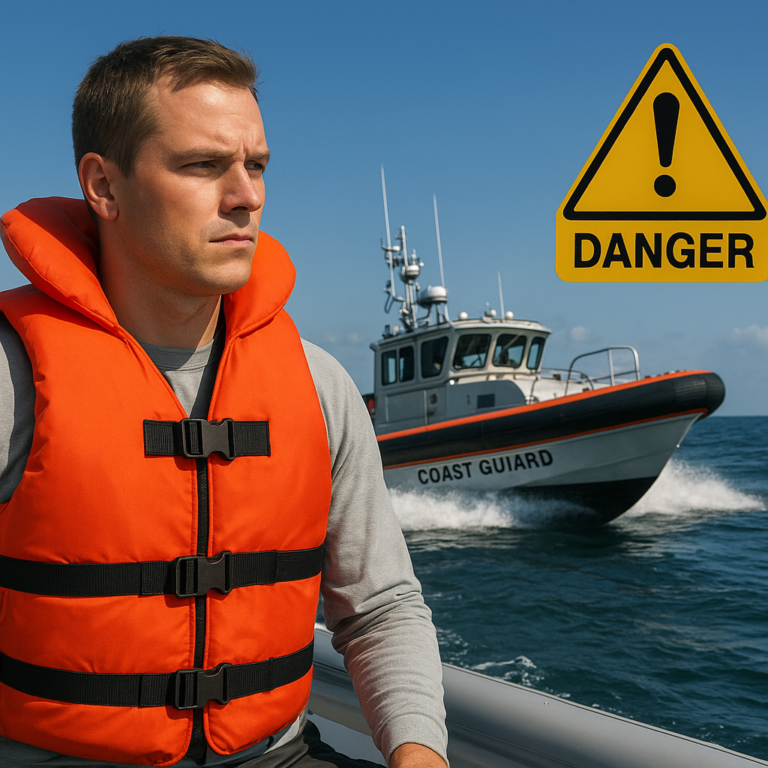
The boat operator is responsible for ensuring a proper lookout is maintained. If you’re asking “who is required to keep a proper lookout while boating?”, the short answer is: everyone must keep watch, but the person navigating the boat must make sure it happens.
A passenger can help by scanning for traffic, swimmers, and hazards, but the operator still needs to assess what’s happening and act safely. We’ve seen how easily a relaxed cruise can turn into a quick “Where did that kayak come from?” moment, especially when glare, wakes, or a bow-high angle hides what’s ahead.
The U.S. Navigation Rules say every vessel must keep a lookout by sight and hearing, along with other appropriate means. A GPS or radar can help, but neither replaces your eyes, ears, and attention.
Key Takeaways
- The operator is responsible for maintaining an effective lookout while navigating.
- Crew members can assist, but the operator remains responsible for responding to hazards and making safe decisions.
- A proper lookout means watching and listening for boats, people, obstacles, navigation marks, and changing conditions.
- GPS, radar, and cameras supplement—not replace—sight and hearing.
- In poor visibility or crowded waters, slow down, scan continuously, and adjust your plan to the conditions.
Table of Contents
- ⚡️ Quick Tips and Facts
- 👀 Who Is Required to Keep a Proper Lookout While Boating?
- The Operator’s Duty to Maintain a Lookout
- When Another Crew Member Can Help
- ⚖️ What “Proper Lookout” Means Under Boating Rules
- The Navigation Rules and Rule 5
- Using Sight, Hearing, and Every Available Means
- 🧭 Why a Proper Lookout Matters on the Water
- 🚤 What a Boater Must Watch and Listen For
- Other Boats, Swimmers, and Floating Hazards
- Shorelines, Markers, Bridges, and Shallow Water
- Weather, Visibility, and Changing Conditions
- 🌫️ Keeping a Lookout in Different Boating Conditions
- At Night and in Restricted Visibility
- In Busy Channels and Congested Waters
- When Towing, Anchored, or Operating a Personal Watercraft
- 📡 Can You Rely on Radar, GPS, or a Camera as Your Lookout?
- ✅ Practical Steps for Maintaining a Proper Lookout
- Set Up the Helm for Clear Visibility
- Manage Distractions and Blind Spots
- Use Crew Members Effectively
- ❌ Common Lookout Mistakes That Put Boaters at Risk
- 🚨 What to Do When You Spot a Collision Risk
- 🛟 Lookout Responsibilities, Liability, and Boating Safety
- 📚 How Proper Lookout Rules Developed in Boating
- Conclusion
- Recommended Links
- FAQ
- Reference Links
⚡️ Quick Tips and Facts
The person in charge of navigating the boat must ensure a proper lookout is maintained. On a small recreational boat, that’s usually the operator. A passenger can help watch, but handing someone else the job does not automatically remove the operator’s responsibility to navigate safely.
The core rule is Rule 5 of the U.S. Navigation Rules: every vessel must maintain a proper lookout “by sight and hearing as well as by all available means appropriate” so it can assess collision risk and danger.
| Quick question | Practical answer |
|---|---|
| Who is responsible? | The operator or person directing the vessel’s navigation is responsible for ensuring an effective lookout. |
| Can a passenger help? | Yes. A capable, attentive crew member can scan and report hazards, but the operator still needs to respond and make safe decisions. |
| What counts as a lookout? | Watching and listening for boats, people, hazards, navigation marks, changing conditions, and signs of collision risk. |
| Is a phone, GPS, or radar enough? | No. Electronics supplement a lookout; they do not replace looking and listening. |
| What if visibility is poor? | Slow down, increase your vigilance, use appropriate sound signals and equipment, and stop or avoid the trip if you cannot proceed safely. |
A sharp lookout is especially important because operator inattention and unsafe choices can have serious consequences. Our related guide explains what is the leading cause of boating fatalities.
👀 Who Is Required to Keep a Proper Lookout While Boating?
The Operator’s Duty to Maintain a Lookout
Under the U.S. Navigation Rules, every vessel must keep a proper lookout. In practical terms, the boat operator is normally responsible for making sure that happens because the operator is controlling the vessel, assessing traffic, and deciding what to do next. The Coast Guard’s Navigation Rules apply the lookout requirement broadly; it isn’t reserved for commercial ships or boats with a formally appointed watchstander.
On a small powerboat, the operator may be the only person aboard. On a larger vessel, a crew member may be assigned to scan a particular sector, report traffic, or keep watch while the operator manages navigation. The job can be shared, but the boat still needs an effective lookout.
That distinction matters. A passenger saying “I’m watching” is helpful only if they are alert, understand what to report, and can communicate clearly. The operator remains responsible for interpreting reports and taking appropriate action.
When Another Crew Member Can Help
A second set of eyes can be valuable, particularly when the helm has blind spots or the boat is operating in crowded water. Before getting underway, agree on:
- Who is scanning and what areas they should watch.
- What to report: the object’s direction, relative movement, approximate distance, and any immediate danger.
- How to get the operator’s attention promptly.
- Whether the lookout should continue watching while the operator checks a chart, adjusts equipment, or deals with a passenger.
A lookout should report observations, not make assumptions. “Boat at two o’clock, closing” is more useful than “We’re probably fine.” And if the operator sees a hazard, they should still assess it directly whenever possible.
Some larger commercial vessels use designated watchstanders and formal procedures. That’s different from the ordinary recreational-boating setup, but the underlying principle is the same: someone must remain able to detect hazards and support safe navigation. For more on vessel makers and the boats they build, explore our Boat Manufacturers guide.
⚖️ What “Proper Lookout” Means Under Boating Rules
The Navigation Rules and Rule 5
Rule 5 doesn’t prescribe a fixed number of people, a particular watch schedule, or a single scanning technique. It sets a performance standard: a vessel must keep a lookout capable of helping it assess the situation and collision risk.
That means the lookout should be appropriate to the conditions. A clear, quiet lake with little traffic calls for less intensive monitoring than a fogy channel, a busy harbor, or a nighttime crossing. The duty doesn’t disappear because the boat is small, the trip is familiar, or the operator has GPS.
The U.S. Coast Guard publishes the Navigation Rules for International and Inland Waters. For the applicable local rules, boaters should also check state and local requirements, which can include additional operating, equipment, and safety obligations.
Using Sight, Hearing, and Every Available Means
A proper lookout is not just staring straight ahead. Rule 5 specifically refers to sight, hearing, and other available means that are appropriate to the circumstances. In practice, that can include:
- Sight: scanning around the vessel, checking for movement, and noticing lights, markers, people, and hazards.
- Hearing: listening for horns, voices, engine noise, or other sound signals.
- Electronics: using radar or other suitable equipment as an additional source of information, when fitted and understood.
- Situational awareness: considering the boat’s speed, stopping distance, visibility, traffic, water depth, and maneuvering room.
A chartploter can show where you are, but it cannot reliably tell you that a swimmer is just beyond the bow. A sound signal can warn you that another vessel is nearby, but it doesn’t reveal its exact position. The safest picture comes from combining observation with appropriate equipment—not trusting one tool to do every job.
🧭 Why a Proper Lookout Matters on the Water
Boats move through a changing environment with other vessels, people, fixed structures, and natural hazards. A collision risk may build gradually: a vessel grows larger in your view, a crossing boat holds a steady bearing, or a marker appears closer than expected. Looking and listening consistently gives you more time to recognize the problem and respond.
We’ve found the most common practical trap is not a dramatic failure of equipment. It’s a brief lapse: someone turns to answer a question, checks a phone, reaches for a drink, or assumes the other boat will move first. A short distraction can coincide with the exact moment a hazard becomes important.
That’s why a lookout is part of safe navigation, not a ceremonial duty. The Coast Guard’s boating safety guidance and its Navigation Rules both emphasize safe operation and awareness of surrounding conditions. You can also browse our Boat Lifestyle articles for practical boating habits that make time on the water safer and more enjoyable.
🚤 What a Boater Must Watch and Listen For
Other Boats, Swimmers, and Floating Hazards
Keep scanning for more than obvious powerboats. A lookout should watch for:
- Small craft, including kayaks, canoes, paddleboards, and sailboats.
- Swimmers, divers, and people near docks or shorelines.
- Boats approaching from ahead, astern, or either side.
- Floating debris, logs, fishing gear, and partially submerged objects.
- Vessels that may be hard to see because of glare, waves, rain, or their size.
Small craft can be difficult to spot, and a person in the water may be nearly invisible at a distance. Reduce speed when visibility, traffic, or maneuvering room calls for it. Don’t assume that a larger or faster vessel has seen you.
Shorelines, Markers, Bridges, and Shallow Water
A proper lookout also includes the route ahead. Watch for navigation aids, buoys, channel edges, bridge openings, docks, pilings, shoals, and other obstructions. Use current charts and local information to understand what those markers mean; a marker is useful only if you correctly identify it and relate it to your position.
In unfamiliar waters, don’t let a chartploter draw your eyes away from the surroundings. A screen can help you follow a route, but it can’t see a new obstruction or a drifting boat for you. If you’re learning how to compare boats and their equipment, our Boat Buying Guide covers practical ownership considerations.
Weather, Visibility, and Changing Conditions
Conditions can change faster than a leisurely cruise suggests. Watch for:
- Darkening skies, squalls, lightning, and shifting wind.
- Fog, rain, spray, glare, or darkness that reduces visibility.
- Waves or wakes that make smaller boats hard to see.
- Changing current, water depth, or traffic near a channel entrance.
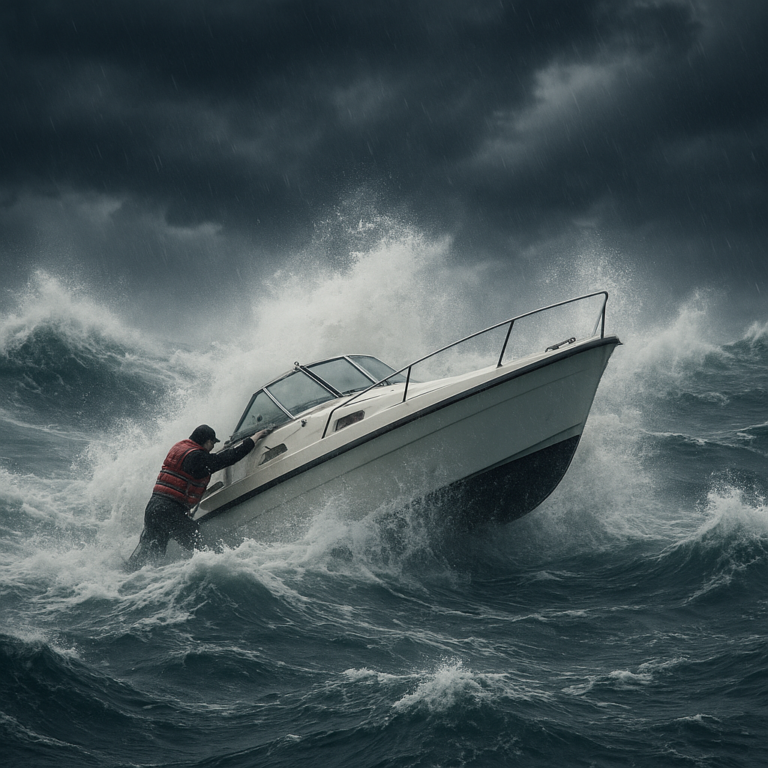
The National Weather Service marine forecasts can help you plan, but conditions still need to be monitored while underway. If visibility worsens, adjust speed and course as conditions require. If you can’t safely determine what is around you, don’t press on just to keep the schedule.
🌫️ Keeping a Lookout in Different Boating Conditions
At Night and in Restricted Visibility
At night, use navigation lights as intended and watch for other vessels’ lights, shoreline features, and navigation aids. Lights can be difficult to interpret at first, especially when reflections, shore lighting, and background glare are involved. Give yourself time to observe rather than deciding what a light means from one quick glance.
Fog, heavy rain, and other restricted-visibility conditions demand extra caution. Rule 5 still applies, but seeing and hearing may be less effective, so operators should use appropriate equipment and follow applicable Navigation Rules, including sound-signal requirements. The Coast Guard’s Navigation Rules explain the rules for restricted visibility. If you cannot keep an effective lookout or safely judge the situation, slowing down, changing course, or stopping may be the safer choice.
In Busy Channels and Congested Waters
Crowded waterways leave less room to react. Scan in a steady pattern, keep track of vessels that could cross your path, and avoid fixating on a single boat while ignoring the rest of the scene.
In a busy area:
- Look broadly before maneuvering. Check ahead, to both sides, and astern where practical.
- Identify developing conflicts. Notice whether another vessel’s relative position is changing and whether it may cross your course.
- Communicate clearly. If a crew member sees a hazard, ask for a concise report.
- Keep a safe speed. Speed should fit visibility, traffic, maneuverability, and available room.
- Follow the applicable Navigation Rules. Don’t assume the other operator will understand your intentions.
This is where “I saw it” is not enough. The operator needs to keep watching long enough to understand whether the situation is changing.
When Towing, Anchored, or Operating a Personal Watercraft
Towing adds hazards behind the boat. Watch the person or vessel being towed, the towline, nearby traffic, and the route ahead. Make sure communications and observer requirements are met under the laws that apply where you’re boating. U.S. federal rules and state requirements can vary by activity and location, so check the current U.S. Coast Guard boating safety information and your state boating agency.
When anchored, a vessel still needs to monitor conditions and nearby traffic; the exact duties depend on the situation and applicable rules. A boat can drift, swing, or be approached by other traffic. A personal watercraft operator also needs to keep a lookout while maneuvering, even when the craft feels more like a motorcycle than a boat. The water does not care what the seat looks like.
📡 Can You Rely on Radar, GPS, or a Camera as Your Lookout?
No single electronic device replaces a proper lookout. Rule 5 calls for sight and hearing as well as other means appropriate to the circumstances. Radar can help detect targets in conditions where it is useful, but operators need to understand its limitations and use it correctly. GPS and chartploters help with position and navigation; they do not show every hazard or tell you what another vessel intends to do.
| Tool | What it can help with | What it cannot reliably replace |
|---|---|---|
| GPS/chartploter | Position, route planning, chart information | Visual scanning, hearing, judgment, or awareness of uncharted hazards |
| Radar | Detecting and tracking certain targets when properly installed and operated | A complete view of every small, obscured, or poorly detected object |
| Binoculars | Checking distant objects and navigation marks | Continuous scanning or awareness of nearby blind spots |
| Camera | Viewing areas that are otherwise difficult to see | Direct observation, hearing, or a crew member’s situational judgment |
| VHF radio | Receiving calls and communicating with other vessels | Looking for traffic or confirming that an area is clear |
Use equipment as an extra layer, not as permission to stop paying attention. The U.S. Coast Guard Navigation Rules are the authoritative starting point for the lookout requirement.
✅ Practical Steps for Maintaining a Proper Lookout
Set Up the Helm for Clear Visibility
Before departure, make the helm usable as a lookout station:
- Adjust your seat or standing position so you can see over or around the console.
- Confirm that passengers, gear, canvas, and equipment do not block critical sightlines.
- Know the boat’s blind spots, including those created by the bow, windshield, or cabin.
- Make sure lights, horn, and navigation equipment are ready for the conditions.
- Brief passengers on safe seating and what to do if they spot a hazard.
A high-performance boat may have plenty of power but still offer limited visibility at certain trim angles or speeds. Boat design and layout matter; our Boat Brands pages help you explore different manufacturers and boat types.
Manage Distractions and Blind Spots
A proper lookout requires attention, so keep distractions away from the person operating the boat. Set up the route and navigation tools before departure, ask passengers to hold nonurgent questions until it’s safe, and pull over or reduce speed if you need to handle a task that takes your attention from navigation.
If the bow blocks part of the view, change your position or speed when safe, and use a passenger as an additional lookout. Don’t lean or stand in a way that creates a new safety hazard. The goal is a better view, not a dramatic balancing act.
Use Crew Members Effectively
A useful lookout assignment is simple and specific:
- Tell the crew member which area or hazard to watch.
- Explain what to report and how to get your attention.
- Ask for updates when you need them, especially during turns or in restricted visibility.
- Keep responsibility for navigation and decisions at the helm.
- Thank them—and take the report seriously.
A lookout who is distracted, facing the wrong way, or unsure what to report is not adding much protection. Clear communication turns an extra pair of eyes into a useful safety layer.
The first video in this article, “Who is required to keep a proper lookout while boating”, offers a brief 1:35 overview of the topic. It can be a handy refresher before a trip, but use the official Navigation Rules and local boating guidance for the actual requirements.
❌ Common Lookout Mistakes That Put Boaters at Risk
Avoid these familiar troublemakers:
- Looking only straight ahead. Hazards can approach from the sides or behind.
- Treating GPS as a substitute for awareness. Position is not the same as a clear path.
- Assuming a passenger is watching. Assign the task and confirm communication.
- Fixating one vessel. Continue scanning the broader scene.
- Ignoring sound signals. A horn or engine may be your first clue that another boat is nearby.
- Operating too fast for conditions. More speed means less time to observe and react.
- Looking down at a phone or chartploter for too long. Set up tools before departure and check them briefly when safe.
- Assuming other operators see you. Maintain your own lookout and follow the rules.
The BoatUS guide to keeping a proper lookout is another useful resource. The key takeaway is not a magic scanning pattern; it’s continuous, attentive awareness matched to the conditions.
🚨 What to Do When You Spot a Collision Risk
When a hazard appears, act deliberately:
- Identify what you see. Determine the object’s direction, movement, and likely risk.
- Alert the crew. Use clear, short language so everyone understands the situation.
- Assess your options. Consider speed, available space, traffic, depth, and the Navigation Rules.
- Take early, appropriate action. Avoid abrupt or confusing maneuvers unless immediate danger requires them.
- Keep watching. Confirm whether your action is working and reassess if the situation changes.
- Use sound or radio communication when appropriate. Don’t assume a signal or radio call replaces safe maneuvering.
Avoid making a last-second turn without checking for other traffic. A maneuver that avoids one boat can create a new risk with another. The Navigation Rules provide the framework; safe action depends on the full situation around you.
🛟 Lookout Responsibilities, Liability, and Boating Safety
A proper lookout is a legal navigation duty and a practical safety measure. Responsibility usually rests with the person directing the vessel, but who may be liable after an incident depends on the facts, the applicable law, and the actions of everyone involved. We can’t determine liability from a single general rule.
To reduce risk:
- Follow the applicable federal, state, and local requirements.
- Operate at a safe speed and keep a lookout suited to conditions.
- Avoid boating while impaired or distracted.
- Maintain safety equipment and know how to use it.
- Make sure passengers understand basic safety expectations.
- Take a boating safety course through a recognized provider or state agency.
The U.S. Coast Guard Navigation Center provides the official Navigation Rules, while the U.S. Coast Guard Boating Safety Division offers broader safety resources. For boating updates and industry context, see our Boat Industry News section.
📚 How Proper Lookout Rules Developed in Boating
The lookout requirement is part of a broader system of rules intended to prevent collisions at sea and on inland waters. The modern U.S. Navigation Rules set standards for conduct, lights, sound signals, and safe operation. Rule 5 states the lookout duty without limiting it to a particular vessel size or a formal crew position.
That helps explain why two pieces of online advice can sound different. Some describe the recreational operator as the person who keeps watch; others discuss a designated lookout on a large vessel. Those statements can both be accurate in context: a crewed commercial vessel may assign a watchstander, while the operator of a small recreational boat generally handles lookout duties personally or uses a passenger to assist. The rule to trust is the official Navigation Rule, not a simplified claim that every boat needs a separate lookout.
The Navigation Rules are the primary source for the legal standard. Practical resources such as BoatUS’s lookout guidance can help translate that duty into safer habits on the water.