Support our educational content for free when you purchase through links on our site. Learn more
How Many Boating Fatalities in the US? Shocking Stats & Safety Tips (2025) 🚤

Every year, hundreds of lives are tragically lost on America’s waterways, but how many exactly—and more importantly, why? At Boat Brands™, we’ve navigated these waters for decades, and the numbers tell a story that’s part cautionary tale, part hopeful progress report. In 2023 alone, there were 564 boating fatalities in the US—a figure that’s actually down from previous years, thanks to better education, technology, and safety gear. But lurking beneath these stats are patterns and preventable mistakes that every boater should know about.
Stick with us as we unpack the “Fatal Five” causes behind most deaths, reveal surprising state-by-state hotspots, and share real-life stories that bring these numbers to life. Plus, we’ll arm you with our top 7 expert strategies for staying safe on the water—because the best way to honor those lost is to make sure it never happens to you or your loved ones.
Key Takeaways
- 564 boating fatalities occurred in the US in 2023, marking an encouraging decline but still a significant risk.
- Alcohol impairment and lack of life jacket use are the leading causes of fatal boating accidents.
- Operator inexperience and inattention remain major factors—education saves lives.
- Smaller boats under 21 feet are involved in most drownings, highlighting the need for vigilance regardless of vessel size.
- Our top 7 safety strategies include wearing life jackets, designating sober skippers, and filing float plans—simple steps that make a huge difference.
- Technological advances like engine cut-off switches and personal locator beacons are game changers for boating safety.
Ready to dive deeper? Keep reading to learn how you can turn these sobering statistics into a personal safety plan that keeps your adventures fun and fatality-free.
Table of Contents
- ⚡️ Quick Tips and Facts
- 🌊 A Deep Dive into Boating Safety: Historical Trends & What We’ve Learned
- 📊 Unpacking the Numbers: How Many Boating Fatalities in the US Annually?
- ⚠️ The “Fatal Five”: Common Causes of Recreational Boating Fatalities
- 🧐 Beyond the “Fatal Five”: Other Contributing Factors to Boating Incidents
- 🛡️ Our Top 7 Strategies for Safer Boating: Preventing Tragedies on the Water
- 👮♀️ The Watchdogs of the Water: How Regulations & Enforcement Keep Us Safe
- 🗣️ From Our Helm: Real-Life Lessons & Close Calls on the Water
- 🚀 Navigating Forward: Innovations & Hopes for a Safer Boating Future
- ✅ Conclusion: Our Commitment to Safer Adventures
- 🔗 Recommended Links for Further Exploration
- ❓ FAQ: Your Boating Safety Questions Answered
- 📚 Reference Links: Our Sources & Where to Learn More
Here at Boat Brands™, we’re more than just experts; we’re lifelong boaters. We’ve seen glorious sunrises on glassy seas and navigated squalls that turned our knuckles white. We’re here to share that hard-won wisdom with you. Because while boating is one of life’s greatest joys, it demands respect. The question of “How many boating fatalities in the US?” isn’t just about numbers; it’s about understanding the stories behind them to ensure we all come home safe. Let’s dive in.
⚡️ Quick Tips and Facts
Before we weigh anchor on the deep details, let’s get you the crucial, must-know numbers. Think of this as your pre-departure checklist for knowledge. While these statistics paint a sobering picture, they also show that safety measures are making a real difference. For a broader perspective, you can also check out our guide on boating deaths per year worldwide.
| Statistic (2023 Data) | The Sobering Number | Why It Matters to You |
|---|---|---|
| Total Fatalities | 564 | A decrease of 11.3% from 2022, showing progress! |
| Fatality Rate | 4.9 deaths per 100,000 registered vessels | The lowest rate in years, proving safety efforts work. |
| Drowning Victims NOT Wearing a Life Jacket | 87% | This is the most preventable tragedy in boating. Wear it! |
| Fatalities with No Boating Safety Instruction | 75% | Education isn’t just a piece of paper; it’s a lifesaver. |
| Alcohol as a Factor in Fatal Accidents | 17% | Alcohol was the leading known contributing factor in fatal accidents. |
🌊 A Deep Dive into Boating Safety: Historical Trends & What We’ve Learned
We’ve been on the water long enough to see the evolution of boating safety firsthand. Gone are the days when a few leaky seat cushions were considered “good enough” for flotation. The game has changed, and for the better. The U.S. Coast Guard has been meticulously tracking these numbers for decades, and their annual Recreational Boating Statistics reports are the bedrock of modern safety education.
The most encouraging trend? The fatality rate has plummeted over the long term. Back in 1971, when the Safe Boating Act kicked off, the rate was a staggering 20.6 deaths per 100,000 registered vessels. Today, it’s less than a quarter of that. This incredible progress is a direct result of better boater education, safer Boat Models, and advancements in safety gear.
But here’s the catch: complacency is the enemy. While the overall trend is positive, the core reasons for accidents haven’t changed much. It still boils down to the decisions we make at the helm.
📊 Unpacking the Numbers: How Many Boating Fatalities in the US Annually?
So, let’s get to the heart of the matter. You asked for the numbers, and they tell a crucial story about risk and responsibility on the water.
🔍 The Latest Data: A Closer Look at Recent USCG Statistics
In 2023, the U.S. Coast Guard recorded 564 recreational boating fatalities. While every single one of those deaths is a tragedy, it’s important to note that this represents an 11.3% decrease from the previous year. This shows that when we prioritize safety, we can make a real impact.
Here’s a quick breakdown of the 2023 statistics:
| Category | 2023 Numbers |
|---|---|
| Total Reported Accidents | 3,844 |
| Total Fatalities | 564 |
| Total Injuries | 2,126 |
| Estimated Property Damage | ~$63 Million |
These numbers, compiled from reports submitted by all 50 states and U.S. territories, give us the clearest national picture of what’s happening on our waterways.
🗺️ Where Do Accidents Happen? Geographical Hotspots & State-by-State Insights
You might think that states with massive coastlines like Florida and California would naturally have the most incidents, and you’d be right in terms of raw numbers. However, when you look at the fatality rate per 100,000 registered boats, a different and more surprising picture emerges.
For instance, a 2023 analysis identified Alaska as having the highest fatality rate, due to its challenging waters and vast, remote coastline. Shockingly, landlocked states like New Mexico and Colorado also ranked high, proving that danger isn’t limited to the ocean.
As highlighted in the featured video, even specific regions can become hotspots. The Gulf Coast, particularly South Alabama, has been identified by the U.S. Coast Guard as a high-risk area. The video points to a tragic incident near Ono Island where excessive speed and misjudging a sandbar led to a fatality—a stark reminder of how local knowledge and prudent speed are critical.
State-level data, like the detailed statistics from the Minnesota DNR, consistently reinforces the national trends. In 2023, of the 17 boating fatalities in Minnesota, a staggering 14 involved alcohol, and 10 victims were not wearing a life jacket. These patterns are a microcosm of the larger issues we see nationwide.
⚠️ The “Fatal Five”: Common Causes of Recreational Boating Fatalities
While the official USCG report lists the top five contributing factors in accidents as operator inattention, improper lookout, operator inexperience, excessive speed, and machinery failure, we at Boat Brands™ like to focus on what turns an accident into a fatality. Based on our experience and a deep dive into the data, here are the five factors that truly represent the gravest dangers.
1. 🍻 Alcohol Impairment: A Dangerous Mix with the Open Water
Let’s be blunt: alcohol is the single leading known contributing factor in fatal boating accidents. It was linked to 17% of all boating deaths in 2023. The sun, wind, and boat vibration already create a fatiguing environment, and alcohol multiplies these effects, impairing judgment, coordination, and reaction time. A “cold one” at the helm is a gamble with your life and the lives of your passengers.
✅ Our Advice: Designate a “Sober Skipper” before you even leave the dock. It’s the same principle as a designated driver, and it’s just as important.
2. 🚫 Lack of Life Jacket Use: The Simplest Safety Measure Often Ignored
This statistic should send a chill down any boater’s spine: Of the boaters who drowned in 2023, 87% were not wearing a life jacket. Drowning is the cause of death in 75% of all boating fatalities. The excuse that “it’s bulky” or “I’m a good swimmer” is meaningless when you’re unexpectedly thrown into cold or rough water.
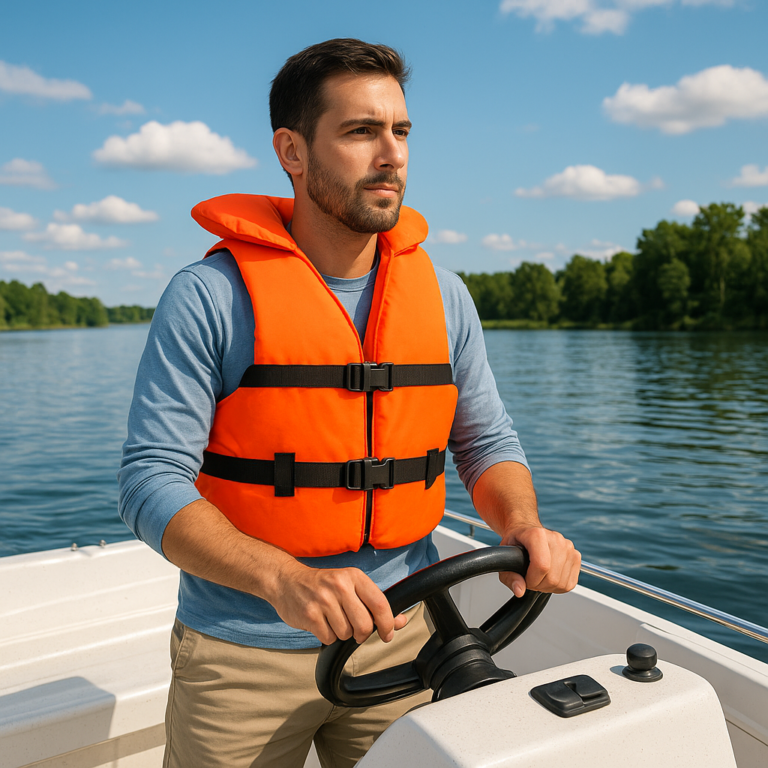
Modern life vests are nothing like the clunky orange blocks of the past. Brands like Mustang Survival and Onyx make comfortable, lightweight, and even auto-inflating models you’ll forget you’re wearing.
❌ The Myth: “I’ll just grab it when I need it.”
✅ The Reality: In a real emergency, like a sudden capsizing or collision, there is no time. Your life jacket can only save you if you’re wearing it.
👉 Shop for modern, comfortable PFDs:
- Mustang Survival: Amazon | West Marine | Mustang Survival Official Website
- Onyx Outdoor: Amazon | Walmart | Onyx Outdoor Official Website
3. 🚤 Operator Inexperience & Inattention: When Skill Falls Short
Here’s another powerful statistic: 75% of deaths occurred on boats where the operator had not received boating safety instruction. Only 15% of deaths happened on a boat where the operator had a nationally-approved safety certificate. The message is crystal clear: education works.
Operator inattention and improper lookout are consistently at the top of the list for accident causes. In today’s world of smartphones and distractions, maintaining a proper 360-degree watch has never been more critical.
4. 🌬️ Weather Woes & Hazardous Waters: Nature’s Unpredictable Challenges
The weather can be a boater’s best friend or worst enemy. A calm, sunny day can turn into a dangerous squall with frightening speed. Hazardous waters were a leading environmental factor in fatal accidents.
Personal Story: Our senior editor, Frank, was once caught in a microburst on the Chesapeake Bay. “The sky went from blue to black in five minutes,” he says. “We went from calm seas to six-foot waves crashing over the bow of our 24-foot center console. We were prepared with our gear stowed and life jackets on, which made all the difference. It was a terrifying reminder that you never, ever bet against Mother Nature.”
5. 💥 Collisions & Capsizing: The Sudden Shock of Impact and Overturn
Collisions with other vessels or fixed objects are the most common type of boating accident. While they account for a smaller percentage of fatalities than drownings from falls overboard, they are incredibly dangerous. Capsizing is also a top killer, especially in smaller boats. A staggering four out of five boaters who drowned were on vessels less than 21 feet long. This highlights the vulnerability of smaller craft like open motorboats and kayaks, which also have some of the highest fatality numbers.
🧐 Beyond the “Fatal Five”: Other Contributing Factors to Boating Incidents
⚙️ Equipment Failure & Maintenance Neglect: When Your Gear Lets You Down
“Machinery failure” consistently ranks among the top five causes of all boating accidents. This can be anything from a steering cable snapping to an engine overheating and dying at a critical moment. A well-maintained boat is a safe boat. Neglecting regular maintenance isn’t just risking a costly repair bill; it’s risking your life. Our Boat Buying Guide section often touches on the importance of surveys and maintenance history for this very reason.
🧑🤝🧑 Passenger Behavior & Overloading: More Than Just the Skipper’s Responsibility
The captain is responsible for their vessel and everyone on it, but passengers also play a role in safety. Sudden movements can affect stability, and distracting the operator at a crucial moment can lead to disaster. Overloading a boat is another critical error. Every boat has a capacity plate stating the maximum weight and number of people it can safely carry. Ignoring it is an invitation for the boat to capsize or swamp.
🛡️ Our Top 7 Strategies for Safer Boating: Preventing Tragedies on the Water
Knowledge is power. Now that you understand the risks, here are our team’s top seven actionable strategies to ensure your time on the water is safe and memorable for all the right reasons.
- 🎓 Get Educated: The stats don’t lie. Taking a boating safety course is one of the most effective things you can do. The U.S. Coast Guard Auxiliary and the BoatUS Foundation offer excellent, often free, online courses.
- 🦺 Always Wear Your Life Jacket!: We can’t say it enough. Make it a rule on your boat: if you’re on the deck, you’re wearing a PFD.
- 🍻 Designate a Sober Skipper: Boating under the influence is just as dangerous as driving under the influence. Don’t do it.
- ☀️ Check the Weather: Before you go, and keep an eye on the sky. Use reliable marine weather apps and have a NOAA Weather Radio on board.
- 🛠️ Maintain Your Vessel: Follow a pre-departure checklist. Check your engine, fuel levels, steering, and all safety equipment before every single trip.
- 🗺️ File a Float Plan: Always tell someone where you are going and when you expect to return. You can download a simple float plan template from the USCG and leave it with a friend or family member on shore.
- 🚨 Equip for Emergencies: Your boat should have more than the bare minimum required gear. A reliable VHF radio from a brand like Standard Horizon is a non-negotiable lifeline. Ensure your flares, from a trusted brand like Orion, are not expired, and your first-aid kit is fully stocked.
👉 Shop for essential safety gear:
- VHF Radios: Amazon | West Marine
- Safety Flare Kits: Amazon | West Marine
👮♀️ The Watchdogs of the Water: How Regulations & Enforcement Keep Us Safe
⚓ The US Coast Guard’s Vital Role in Boating Safety
The U.S. Coast Guard is the primary federal agency for maritime safety and enforcement. They not only conduct search and rescue missions but also set the minimum safety equipment requirements for recreational vessels. Their tireless work in data collection and public education is a major reason boating has become safer over the decades.
⚖️ Understanding State Boating Laws & Requirements
While the Coast Guard sets federal standards, boating laws can vary significantly from state to state. These differences can include:
- Mandatory Education: Some states require all boat operators to have a safety certificate.
- Age Restrictions: Minimum ages for operating a boat or PWC differ.
- Life Jacket Laws: Specific rules for when children must wear PFDs.
Always check the regulations for the specific state you’ll be boating in. Your local Department of Natural Resources (DNR) or Fish and Wildlife Commission website is the best place to find this information.
🗣️ From Our Helm: Real-Life Lessons & Close Calls on the Water
Statistics are one thing, but personal experience drives the point home. A few years back, our colleague Dave was fishing on his Boston Whaler Montauk 170. A sudden wake from a larger, speeding boat hit him at an unexpected angle, knocking him right off his feet and into the water. Dave is a decent swimmer, but the shock and cold water took his breath away.
The thing that saved him? The auto-inflating PFD he was wearing. It popped the second it hit the water, keeping his head up until he could get his bearings and climb back aboard. He tells everyone now, “I thought it was just another Saturday of fishing. I never thought I’d actually need it. That little CO2 cartridge saved my life, no question.” It’s a story that has made our entire team even more vigilant about wearing our vests every single time we leave the dock.
🚀 Navigating Forward: Innovations & Hopes for a Safer Boating Future
The future of boating safety is bright, thanks to incredible advancements in technology.
- Engine Cut-Off Switches (ECOS): Now required on most new boats under 26 feet, these devices stop the engine if the operator is thrown from the helm, preventing runaway boats and dangerous propeller strikes.
- GPS and Chartplotters: Modern units from brands like Garmin make navigation easier and safer than ever, helping boaters avoid hazards.
- Personal Locator Beacons (PLBs): Devices from companies like ACR Electronics can send a distress signal with your exact location to satellites from anywhere on Earth, providing a crucial link to rescuers when you’re out of cell or VHF range.
As this technology becomes more common and boaters become more educated, we are confident that we can continue to drive the number of boating fatalities down. The goal, after all, is to make sure every trip ends with happy memories and a safe return to shore.
✅ Conclusion: Our Commitment to Safer Adventures
So, how many boating fatalities are there in the US? The answer is sobering but hopeful: in 2023, 564 lives were lost on recreational waters, a number that has thankfully been declining thanks to improved safety awareness, better education, and technological advances. Yet, the core message remains crystal clear—most boating fatalities are preventable.
From our own close calls and those shared by fellow boaters, the story is the same: wear your life jacket, stay sober, get trained, and respect the water and weather. The statistics don’t lie—87% of drowning victims weren’t wearing life jackets, and alcohol remains a leading cause of fatal accidents. But with simple, consistent precautions, you can dramatically reduce your risk.
We hope this deep dive has armed you with the knowledge and motivation to make every trip safer. Remember Dave’s story about the life-saving auto-inflating PFD? That could be you or someone you love. So, let’s commit to safer boating—not just for ourselves, but for everyone who shares the water with us.
Now, ready to gear up and get out there with confidence? Let’s make safety the first mate on every voyage!
🔗 Recommended Links for Further Exploration
Looking to upgrade your safety gear or deepen your boating knowledge? Here are some top picks from our experts at Boat Brands™:
-
Mustang Survival Life Jackets:
Amazon | West Marine | Mustang Survival Official Website -
Onyx Outdoor Life Jackets:
Amazon | Walmart | Onyx Outdoor Official Website -
Standard Horizon VHF Marine Radios:
Amazon | West Marine -
Orion Marine Safety Flares:
Amazon | West Marine -
Recommended Boating Safety Books:
Boat Smart! The Complete Boater’s Handbook by BoatUS Foundation — Amazon
The Complete Guide to Boating Safety by U.S. Coast Guard Auxiliary — Amazon
❓ FAQ: Your Boating Safety Questions Answered
What are the leading causes of boating accidents in the US?
The top causes of boating accidents include operator inattention, improper lookout, operator inexperience, excessive speed, and machinery failure. These factors often overlap, with human error playing a dominant role. For example, failing to keep a proper lookout can lead to collisions, while inexperience can cause poor judgment in challenging conditions. Machinery failure, often due to poor maintenance, also contributes significantly. The U.S. Coast Guard’s annual Recreational Boating Statistics provide detailed insights.
How can I improve safety while boating?
Improving safety starts with education—taking a certified boating safety course is essential. Always wear a life jacket, regardless of your swimming ability. Avoid alcohol consumption while operating a boat, designate a sober skipper, and check weather conditions before and during your trip. Maintain your vessel regularly and ensure all safety equipment is functional. Filing a float plan with someone onshore adds an extra layer of security. Using modern safety gear like VHF radios and personal locator beacons can be lifesaving in emergencies.
What are the most common boating safety regulations in the US?
Boating safety regulations vary by state but generally include:
- Mandatory life jacket requirements, especially for children.
- Boating safety education certificates required for operators in many states.
- Age restrictions on operating certain vessels.
- Engine cut-off switch requirements on smaller boats.
- Speed limits and no-wake zones to prevent collisions.
Always check local laws before boating. State agencies like the Department of Natural Resources or Fish and Wildlife Commission websites are excellent resources.
How does alcohol consumption affect boating accident rates?
Alcohol impairs judgment, coordination, and reaction time—critical faculties for safe boating. It is the leading known contributing factor in fatal boating accidents, involved in about 17% of deaths where the cause was known in 2023. Alcohol use increases the risk of drowning, collisions, and falls overboard. The U.S. Coast Guard and boating safety organizations strongly advise against any alcohol consumption while operating a boat.
Why is wearing a life jacket so critical?
Drowning accounts for 75% of boating fatalities, and 87% of those who drowned were not wearing life jackets. Life jackets keep you afloat and your head above water, especially in cold or rough conditions where swimming ability alone may not save you. Modern life jackets are comfortable and designed for various activities, making it easier than ever to stay protected.
What technological innovations are improving boating safety?
Recent innovations include:
- Engine Cut-Off Switches (ECOS): Automatically stop the engine if the operator falls overboard.
- GPS and Chartplotters: Help avoid hazards and navigate safely.
- Personal Locator Beacons (PLBs): Send distress signals with precise location to rescuers.
- Auto-inflating life jackets: Provide comfort and instant flotation when needed.
Brands like Garmin, ACR Electronics, and Mustang Survival are leading the charge in these technologies.
📚 Reference Links: Our Sources & Where to Learn More
- U.S. Coast Guard Recreational Boating Statistics: uscgboating.org
- Minnesota Department of Natural Resources Boating Safety Statistics: dnr.state.mn.us
- American Boating: Boating Fatality Facts: americanboating.com/boating-fatality
- Mustang Survival Official Website: mustangsurvival.com
- Onyx Outdoor Official Website: onyxoutdoor.com
- Standard Horizon Marine Radios: standardhorizon.com
- Orion Marine Flares: orionsignals.com
- U.S. Coast Guard Boating Safety Education: cgaux.org/boatinged
- BoatUS Foundation Boating Courses: boatus.org/courses
- Garmin Marine Electronics: garmin.com/marine
- ACR Electronics Personal Locator Beacons: acrartex.com
Ready to take your boating knowledge and safety to the next level? Dive into our Boat Brands™ and Boat Buying Guide for more expert insights and gear reviews. Safe travels, and may your adventures always end with a smile! 🚤⚓